Permit-to-work issue requirements and rules for work aloft, over the side and hot work (ILO code of practice)
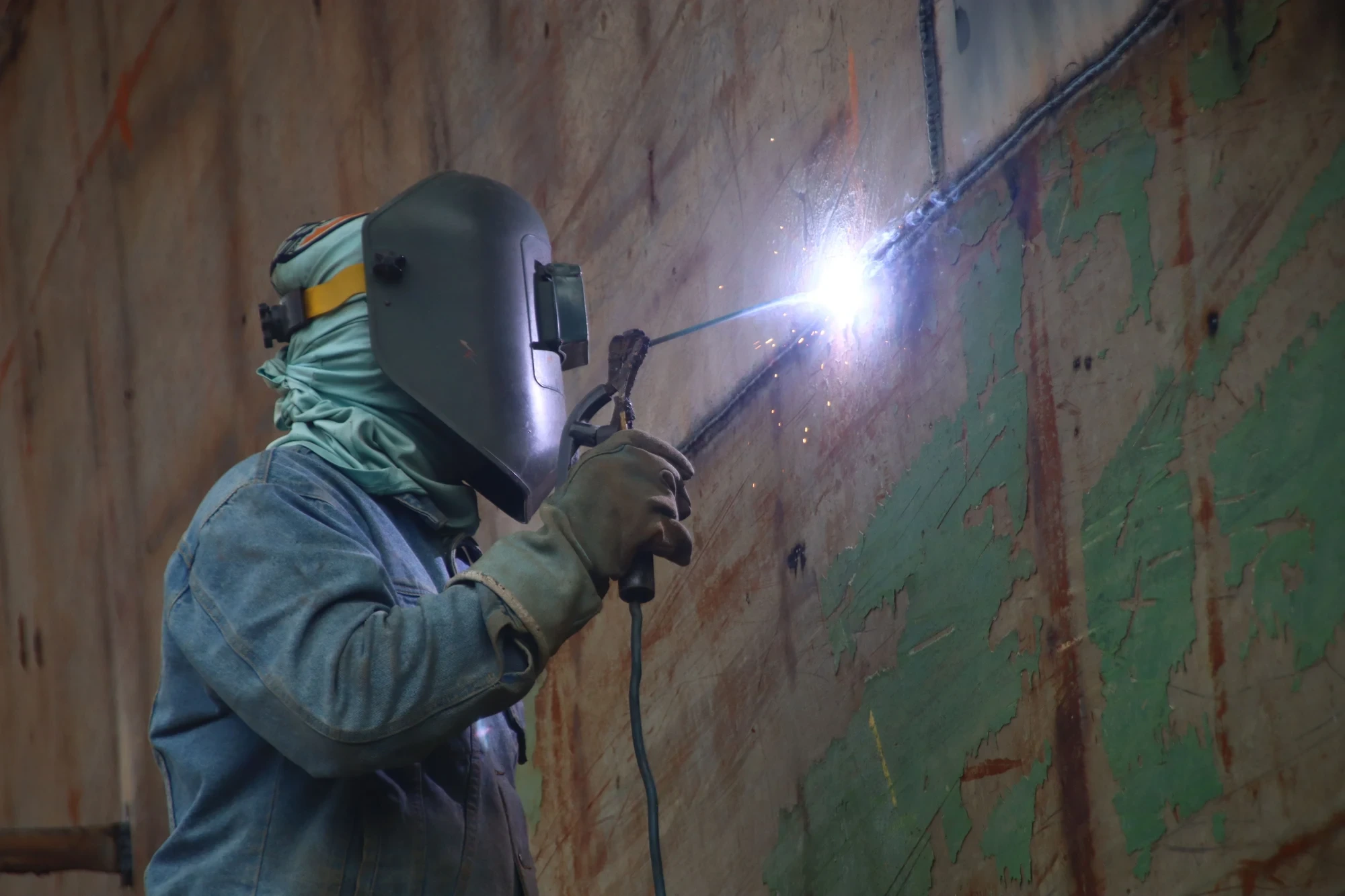
The ILO code of practice Accident prevention on board ship at sea and in port sets out safety standards for shipboard work chapter by chapter. A meeting of experts adopted the revision in 1993, and the second edition appeared in 1996. Chapter 4 defines the permit-to-work system, and Chapters 13 and 15 deal with hot work and with work aloft and over the side.
This article looks at which jobs the code ties to a permit and who signs. Enclosed space entry is in the MSC.581(110) article and the steps of risk assessment are in the risk assessment article, so they are not repeated here.
This is a non-binding code of practice
The preface of the code (page VI) states its own status.
The code should not be regarded as a legally binding instrument
The same paragraph says the code is not intended to supersede national laws or safety and health rules. Where a recommendation is impracticable for a particular ship or operation, the intent should be observed and the risks considered. That is why nearly all of the text is written with should.
That does not cut it off from the MLC. MLC Guideline B4.3.1 paragraph 1 says national provisions under Standard A4.3 should take this code and its subsequent versions into account. Part B, though, is the non-mandatory part of the Convention. The duties that actually bind a ship come through flag State law and the company’s safety management procedures.
Scope is in 1.2. The code covers all seafarers on all seagoing ships ordinarily engaged in commercial maritime navigation, and paragraph 1.2.2 says its provisions should be considered basic minimum requirements.
The permit is a form reserved for the more hazardous jobs
Paragraph 4.1.1 defines the system as safety procedures specified in writing on a form issued to seafarers entrusted with potentially hazardous work. Paragraph 4.1.2 says to use permits only for the more hazardous tasks and not to make the system over-complicated. Writing a permit for every job departs from this paragraph.
Which jobs qualify is stated with different strength from chapter to chapter.
| Work | Paragraph | Strength of the wording |
|---|---|---|
| Enclosed space entry | 10.6.1 | The system is to be used |
| Welding, flame-cutting and other hot work outside a workshop | 13.1.1 | Conducted within the system |
| Work near transmitting aerials | 16.5.3 | Only within the system |
| Hazardous operations on deck or in cargo spaces | 20.1.5 | Only under the system |
| Work aloft or over the side | 15.1.1 | Consider the system depending on the nature of the work |
| Machinery space maintenance | 21.1.4 | Within the system when necessary |
| Repairs to electrical installations | 16.1.11 | By a competent person or when a permit has been issued |
| Work on specific vessel types | 24.1.3 | Permit procedures unless the work presents no undue hazard |
Notice that work aloft and over the side is not in the top rows. The code does not place it under a permit across the board; it asks for a judgment. Hot work turns on location. Outside a workshop, it comes inside the system.
The officer and the person in charge sign together and the master signs again
Paragraph 2.4.14 has the master institute the system on board. Paragraph 4.1.5 sets the order of issue.
- Only an officer with experience in the work operation issues the permit.
- That officer ensures the checks have been properly carried out.
- That officer signs together with the person in charge, only when satisfied it is safe to proceed.
- The master countersigns.
The content of the form is in paragraphs 4.1.3 and 4.1.4. Describe the work and the precautions, consider all foreseeable hazards, write the precautions in correct sequence, and include a checklist and the emergency procedure for an accident. Paragraph 4.1.6 has the procedures cover locking off at points of isolation, signing for and cancelling permits, and making live.
Appendix I (pages 123 and 124) is a sample form. As a sample, it does not have to be used as it stands.
| Part of the form | Content | Who marks it |
|---|---|---|
| Head | Work, period of validity, location, person in charge, persons performing the work, two signatures with date and time | Responsible officer, master |
| Left-hand spaces of work sections | Marks the applicable sections and items, deletes subheadings that do not apply | Responsible officer |
| Right-hand spaces of work sections | Marks each check when completed | Person in charge |
| Certificate of checks | Confirms all precautions are taken and will be maintained during the work | Person in charge |
| Certificate of completion | Work completed, persons, materials and equipment withdrawn, date and time | Person in charge |
The work sections are enclosed spaces, machinery or equipment, hot work, other work and additional precautions. The left and right spaces belong to different people. The officer decides what is to be checked, and the person in charge marks what has been done. The joint signature of paragraph 4.1.5 appears on the form split between the officer’s signature at the head and the person in charge’s signature on the certificate of checks.
The period of validity is a blank. The code sets no time limit for a permit. Withdrawing a permit during work and reassessing is written in 10.6 for enclosed spaces, and paragraph 4.1.6 only says cancellation should be covered. For other work, validity and withdrawal conditions have to come from company procedures.
For work aloft and over the side the code writes down figures
Chapter 15 separates judgment before the work from equipment standards. On the judgment side:
- In general the work is not permitted if the ship’s movement makes it hazardous (paragraph 15.1.2). Strong tidal or current rips in coastal waters also count (paragraph 15.1.3).
- Near the whistle, funnel, radio aerials and radar scanners, inform the relevant officers before starting and isolate equipment or apply procedures. Inform them again on completion (paragraph 15.1.4).
- Young or inexperienced persons work only accompanied by an experienced seafarer or under adequate supervision (paragraph 15.1.5).
- No cargo handling in the vicinity (paragraph 15.1.11).
- A competent person supervises continuously (paragraph 15.1.12).
Protection is gathered in paragraph 15.1.6. Everyone wears a safety harness, with safety nets rigged where appropriate. Those working over the side wear life jackets or flotation devices. Someone attends on deck, and a lifebuoy with a line is readily available. Tools are not carried in pockets but secured to the belt by lanyard (paragraph 15.1.7).
The equipment figures are below.
| Equipment | Standard | Paragraph |
|---|---|---|
| Cradles | At least 40 cm wide, guard-rails to 1 m | 15.2.1 |
| Ropes | Load tested before use to four or five times the expected load | 15.4.4 |
| Rope inspection | Each time before use, and daily when in use | 15.4.3 |
| Portable ladder height | At least 1 m above the top landing place | 15.5.3 |
| Rigid portable ladders | 65 to 70 degrees to the horizontal, at least 15 cm clearance behind the rungs | 15.5.5 |
A person is hoisted in a bosun’s chair by hand only, never by a winch or other machine (paragraph 15.3.3). Ropes for work aloft stay in a dedicated locker and are used for nothing else (paragraph 15.4.2). Paint and detergents are kept out because they may damage ropes.
To work the rope test through with hypothetical numbers, if a person and tools come to an expected load of 120 kg, the test load is 120 kg × 4 = 480 kg to 120 kg × 5 = 600 kg.
In hot work the adjacent spaces come before the work point
Paragraph 13.3.1 has inspections and tests done before starting, to ensure no combustible solids, liquids or gases are at the work area or in adjacent compartments. Heat or sparks from the work could ignite them. The rest of the precautions fall before, during and after the work.
| When | Precaution | Paragraph |
|---|---|---|
| Before | Clean oil, grease and combustibles from surfaces, close openings where sparks could fall | 13.3.2, 13.3.3 |
| Before | A competent person certifies tanks, holds and pipelines that held flammable substances as gas-free | 13.3.4 |
| Before | Competent operators familiar with the equipment; a competent person inspects it before use | 13.1.2 |
| During | An assistant instructed in emergency procedures in continuous attendance | 13.1.5 |
| During | Fire watch in the work area, adjacent areas and the far side of affected bulkheads; extinguishers at hand | 13.3.5, 13.3.6 |
| After | Fire watch kept for a suitable period because of delayed fires | 13.3.5 |
The hot work section of the sample form has four lines. Area clear of dangerous material and gas-free, ventilation adequate, equipment in good order, fire appliances in good order. Fire watch and the assistant are not in those four lines, so they have to go in additional precautions.
There are also standards by method. Electric welding uses a direct current source and the two-cable system with the return separately earthed to the ship’s structure (paragraphs 13.4.1 and 13.4.2). A welder never works in wet conditions (paragraph 13.5.4). Flame-cutting equipment has back pressure valves near the torch and flame arrestors on the low pressure side of the regulators (paragraph 13.6.1). Acetylene is not used above 1 atmosphere gauge (paragraph 13.6.3). A hose that has had a flashback is discarded (paragraph 13.6.5).
Under paragraph 13.1.6, tankers also need Chapter 24. Paragraph 24.1.3(e) allows work involving sparks or heat only once authorized and after the area is found gas-free or declared safe. Paragraph 24.5.3 points oil tankers to ISGOTT.
When one job has several grounds for a permit, more of the form has to be written by hand
As a hypothetical, a bracket on the mast has to be welded at sea. It is hot work outside a workshop, it is work aloft, and it is near a radar scanner.
Chapter 13 decides whether a permit is needed. As hot work outside a workshop, it goes inside the system. That Chapter 15 only asks to consider a permit for work aloft leaves no choice here. Paragraph 15.1.1 says a form for working aloft should reflect its particular nature, but the sample in the Appendix has no section for it. So more has to be written in other work and additional precautions.
| Space | Content | Source |
|---|---|---|
| Hot work | The four checks of the Appendix | Appendix I |
| Other work | Sea state judgment, radar isolation and notice to officers, harness, securing tools | Chapter 15 |
| Additional precautions | Attending assistant, fire watch positions and end time | 13.1.5, 13.3.5 |
Worth confirming
This article draws on the preface, Chapters 1, 2 and 4, the permit passages of Chapter 10, Chapters 13, 15, 16, 20, 21 and 24, and Appendix I of the code. Page numbers are printed page numbers.
The code is the 1996 edition, and the Conventions it cites are as of that time. MLC Guideline B4.3.1 refers to subsequent versions too, so check the current ILO edition. The following are not covered by this article. The code has no figure for how long a permit lasts, how long to keep a fire watch, or a gas concentration limit before hot work. Hot work on tankers needs ISGOTT separately. No national law of any country is covered, so check flag State law and the company’s safety management procedures.
You can consult the cited source documents
These links lead to the official publishers of the documents discussed here. Match the edition and provisions cited in the article, and check subsequent amendments and flag-state implementation before applying them.
Continue with the related operational guidance
The code's form puts checks, period of validity, signatures and completion on one sheet. Bellbook takes a checklist by permit type and a valid-from and valid-to time, passes the request to the approver (master or chief engineer) for signed approval, and closes it as completed when the work ends. Past its time, a permit is reissued.
Start for freeRelated reading
- The five steps of a shipboard risk assessment and the order of preventive measures (MLC Standard A4.3 and the ILO guidelines)Crew and labour
- The headcount that makes a safety committee mandatory and the boundary between safety representatives and the master's designee (MLC Standard A4.3)Crew and labour
- Three of the nine social security branches and the split between flag and residence (MLC Regulation 4.5)Crew and labour