Tokyo and Paris MOU 2026 cargo securing CIC questionnaire items and the documents a ship should have ready
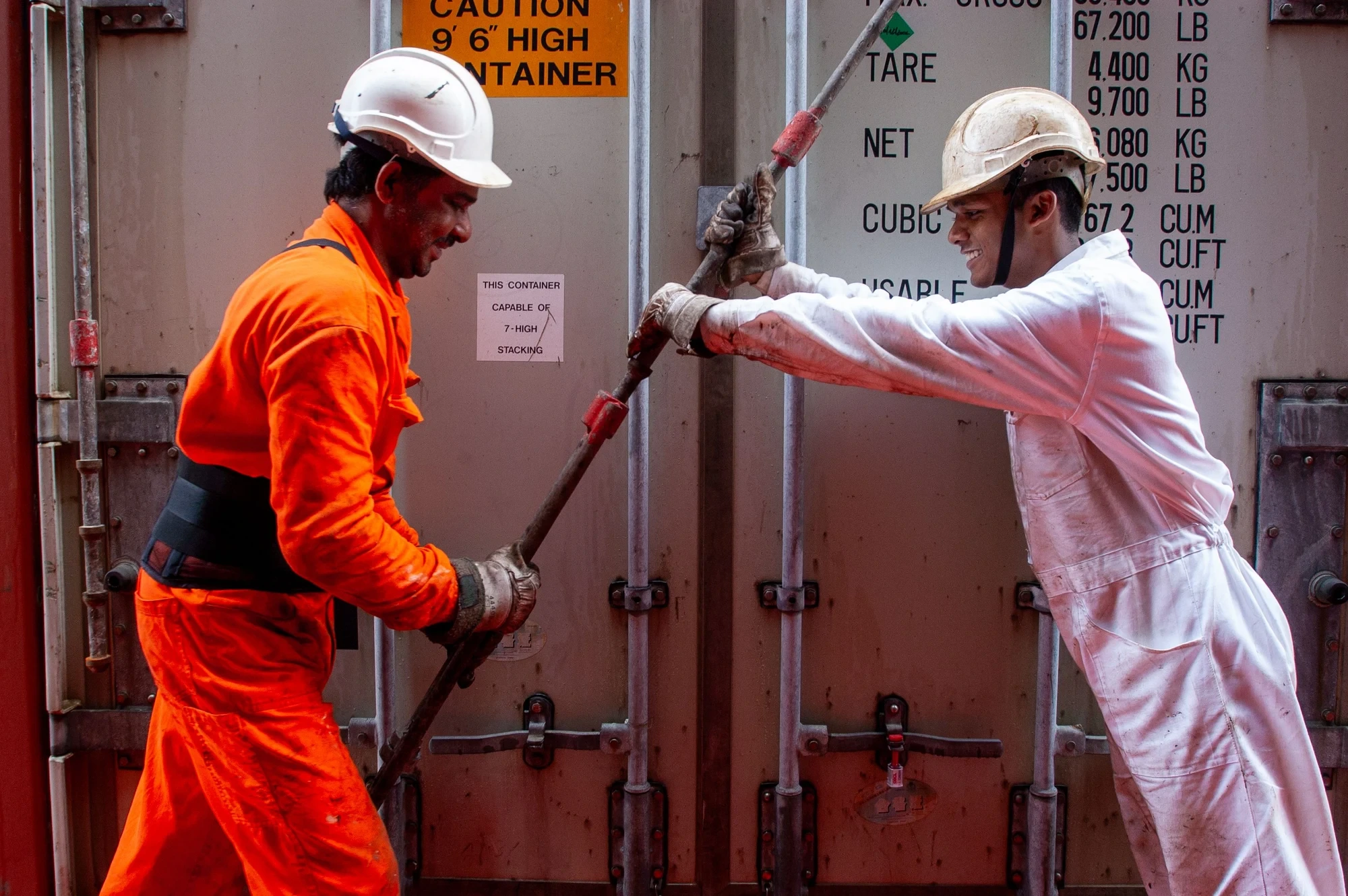
The Concentrated Inspection Campaign (CIC) on cargo securing by Member Authorities of the Tokyo MOU and Paris MoU covers 1 September to 30 November 2026. The subject is the current SOLAS requirements on the loading, stowage and securing of cargo units and cargo transport units. This article rests only on the press release dated 3 August 2026 and the questionnaire attached to it.
Scope: this campaign is a regional measure used in PSC inspections in the two MOU regions. It is not a worldwide obligation. Question 1 asks whether the CIC applies to the ship, but this document does not say which ships are covered.
The CIC runs alongside routine PSC inspections and a ship gets it once per MOU
According to the press release, Member Authorities carry out the CIC in conjunction with routine PSC inspections. A ship is subject to only one CIC inspection in the period, per MOU. Because the wording counts per MOU, a ship trading in both regions can receive one in each.
Port State Control Officers (PSCOs) use a questionnaire developed by the two MOUs to check how cargo securing obligations have been met. Deficiencies go on the inspection report. Action by the port State can range from recording a deficiency to detaining the ship. The results go to the governing bodies of both MOUs, with a view to later submission to the IMO.
Eight of the twelve questionnaire rows can lead to detention being considered
The questionnaire header says that a No to questions 1 to 10 must come with a deficiency, leaving out 6 and 10a. A No on a question marked with an asterisk means the ship may be considered for detention. The table below shortens the questions.
| Item | What it looks at | If No |
|---|---|---|
| 1 | Does the CIC apply to this ship | For information |
| 2a | An approved cargo securing manual (CSM) on board | Deficiency, detention may be considered |
| 2b | Clear lashing instructions in the CSM for each stowage situation on board | Deficiency, detention may be considered |
| 3 | Relevant officers know the weight content of the CSM | Deficiency, detention may be considered |
| 4 | The CSM is being complied with | Deficiency, detention may be considered |
| 5 | The cargo plan reflects the VGM of containers being loaded | Deficiency, detention may be considered |
| 6 | A Cargo Safe Access Plan (CSAP) exists | For information |
| 7 | Enough approved portable securing devices of the right brand and type | Deficiency, detention may be considered |
| 8 | Condition, compatibility and maintenance of fixed and portable devices | Deficiency, detention may be considered |
| 9 | The cargo stow meets bridge visibility requirements | Deficiency, detention may be considered |
| 10a | Heavy weather navigation procedures or arrangements exist | For information |
| 10b | Where they exist, they were complied with | Deficiency |
The asterisk wording is that detention may be considered. A No does not by itself mean detention.
Four questions ask four different things about the CSM
Question 2a only looks at whether an approved CSM is on board. Question 2b looks at what is in it. Because the wording takes in all specific stowage situations found on board, cargo stowed in a way the CSM gives no lashing instruction for makes 2b a No even when 2a is a Yes. NA on 2b can be recorded only if 2a is a No.
Question 3 looks at people, not paper. It asks whether relevant officers know the CSM and narrows the scope to the following.
- Container stack weight and tier weight distribution
- Weight limitations for tank top, hatch covers and decks
Question 4 asks whether the CSM is actually being complied with. With the book on board and the officers familiar with it, a stow that departs from the CSM on the day still fails at question 4.
Question 7 covers quantity and type, question 8 covers condition and maintenance
Question 7 is about portable devices only. It looks at whether there are enough to stow and secure the cargo as the CSM requires, whether they are approved, and whether the brand and type are correct.
Question 8 covers both fixed and portable devices. It looks at three things: good condition, compatibility with the ship, and maintenance under the inspection and maintenance scheme in the CSM. To show the scheme was followed, the ship has to be able to produce the inspection and maintenance records.
Question 5 is a deficiency item and question 6 is for information
Both ask about containers, but the outcomes differ. Question 5 asks whether the cargo plan reflects the verified gross mass (VGM) of the containers being loaded. It carries an asterisk, so a No brings a deficiency and detention may be considered.
Question 6 asks whether there is a CSAP to help with the stowage and securing of containers. It is for information and is also left out of the deficiency rule in the header.
Heavy weather procedures are asked in two steps, exist and followed
Question 10a asks whether heavy weather navigation procedures or arrangements exist. They include precautions against the loss of cargo, and the question gives procedures within the safety management system (SMS) as an example. It is for information.
Question 10b asks, where the procedures exist, whether they were complied with. NA can be recorded only if 10a is a No. So within the questionnaire, a ship with procedures that were not followed gets a deficiency, and a ship without procedures gets NA on 10b. That is a recording rule of the questionnaire. Whether another requirement calls for these procedures is not answered by this document.
Question 9 looks at whether the resulting stow meets bridge visibility requirements. It is an asterisk question.
The documents to have ready can be worked back from the questions
The questionnaire gives no separate document list. The table below is drawn from the questions and is not an official list.
| Document | Item | What to look at before the inspection |
|---|---|---|
| Approved CSM | 2a, 2b, 3, 4 | The approved copy is on board and covers this stow with lashing instructions |
| Cargo plan | 5 | The VGM of containers being loaded is in it |
| Portable securing device inventory | 7 | Quantity, brand and type match the CSM |
| Securing device inspection and maintenance records | 8 | They follow the scheme in the CSM |
| CSAP | 6 | It is on board |
| Heavy weather navigation procedures | 10a, 10b | They exist in the SMS or elsewhere and were followed on this voyage |
A Yes does not mean the lashing design is right
The questionnaire ends with a caveat.
does not indicate that the lashing arrangement and associated equipment complies
A Yes to any question is not a finding that the lashing arrangement and equipment meet the intended design parameters. The questionnaire checks documents and condition. It does not replace the lashing calculation.
Worth confirming
Some things are not covered by this article because the document does not answer them.
- The criteria for ships covered by the CIC. Question 1 is for information, yet the header leaves only 6 and 10a out of the deficiency rule and does not leave out 1. How a No on question 1 is handled is not stated.
- The SOLAS regulation behind each question and the content of the bridge visibility requirements.
- How a ship that carries no containers answers questions 3, 5 and 6.
- Whether there is separate guidance for PSCOs and what it says.
- The campaign results. This document contains none.
This article is based on the press release and questionnaire published on the Paris MoU website. If the port State you are calling at has issued its own notice, check that as well.
You can consult the cited source documents
These links lead to the official publishers of the documents discussed here. Match the edition and provisions cited in the article, and check subsequent amendments and flag-state implementation before applying them.
Continue with the related operational guidance
Question 8 asks whether securing devices were maintained under the inspection and maintenance scheme in the CSM. Put the securing devices into the Bellbook PMS as equipment and the CSM intervals in as jobs, and the next due date and the completion records build up per ship.
Start for freeRelated reading
- PSC ACTION codes, rectification deadlines and how to handle eachInspections and audits
- PSC inspections of ships carrying industrial personnel, application, headcount, training records and detention grounds (Paris MoU PSCC 57/2024/06)Crew and labour
- How Paris MoU PSCOs match seafarer certificates, flag State endorsements and the minimum safe manning document (PSCC 57/2024/05)Crew and labour