PSC ACTION codes, rectification deadlines and how to handle each

Read the deficiency code, action wording, deadline and detention status separately when a PSC report arrives. One action code does not establish permission to sail. This guide uses the official Paris MoU Inspection Outcome guidance.
Check the region and edition before interpreting action codes
| Code | Meaning in Paris MoU guidance | Operational task |
|---|---|---|
10 |
Rectified during inspection and verified by the inspector | Link completion evidence and inspection record |
17 |
Rectify before departure | Complete correction and retain evidence before sailing |
19 |
Administration safety management audit required before departure | Arrange the audit and follow authority instructions |
21 |
Company corrective action on the ISM system within 3 months | Track the company owner, action plan and evidence |
This is not a complete code list. Do not transfer it unchanged to another MOU or an older edition. Ask the issuing authority about unclear deadlines or conditions and link its reply to the record.
Distinguish correction before departure from release of detention
Paris MoU describes 17 as applying to deficiencies not serious enough by themselves to justify detention. For a ship that is not detained, correction is the master’s responsibility and inspector verification is not normally required. A separate detention in the same report still requires release.
A company’s completion report alone does not lift detention. The inspector must verify correction before release. Follow the authority’s instructions on verification and sailing conditions; do not assume that every case requires another physical boarding.
Turn a fictional report into separate work items
Suppose a fictional ship’s report contains 17 for a firefighting deficiency and an ISM-related 21. Prepare repair and evidence before departure for the first item, and separately assign the company action and deadline for the second. Closing one does not close the other. Check the report’s separate decision for actual detention status.
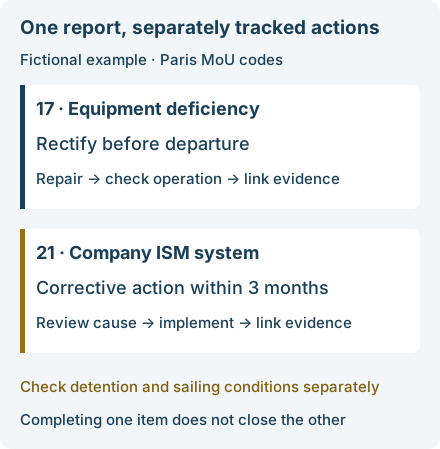
The repair owner links completion evidence for the equipment; the company owner links the cause review and implementation of ISM corrective action. Keep their statuses and deadlines separate. If there is also a detention order, track the confirmation needed for its release.
The PSC follow-up CSV records the authority, report reference, deficiency code, action code and original wording, stated deadline, detention status, owner, evidence and authority confirmation reference. The blank form neither calculates dates automatically nor grants permission to sail. The report’s deadlines and instructions govern.
Check the source and the scope of this correction
The Paris MoU Inspection Outcome page was checked on 2026-09-28. This revision replaces the previous cross-region code table and blanket statement about another boarding. It also removes claims that a deficiency category alone proves maintenance failure or personal fault. Root-cause analysis requires actual records and investigation.
Continue with the related operational guidance
The deficiency code and the ACTION code, the real date converted from that code, the rectification and the root cause all stay in one place. Aggregate the whole fleet by deficiency code group and you can see how many times the same group has come up. PSC and FSC findings are registered the ISM way and tracked to closure.
Start for freeRelated reading
- How reports from pilots and port authorities lead to a PSC inspection (EU Directive 2009/16 Article 23)Inspections and audits
- The order and duration of the Interim DOC and Interim SMC on the day the company changes (ISM Code chapter 14)Inspections and audits
- Seven HSSC survey types, the anniversary window, where the new period starts by renewal timing and how an extension is counted (Resolution A.1120(30))Inspections and audits