Paris MoU ship risk profile weighting points and inspection windows and where the numbers differ from Tokyo MOU (46th Amendment)
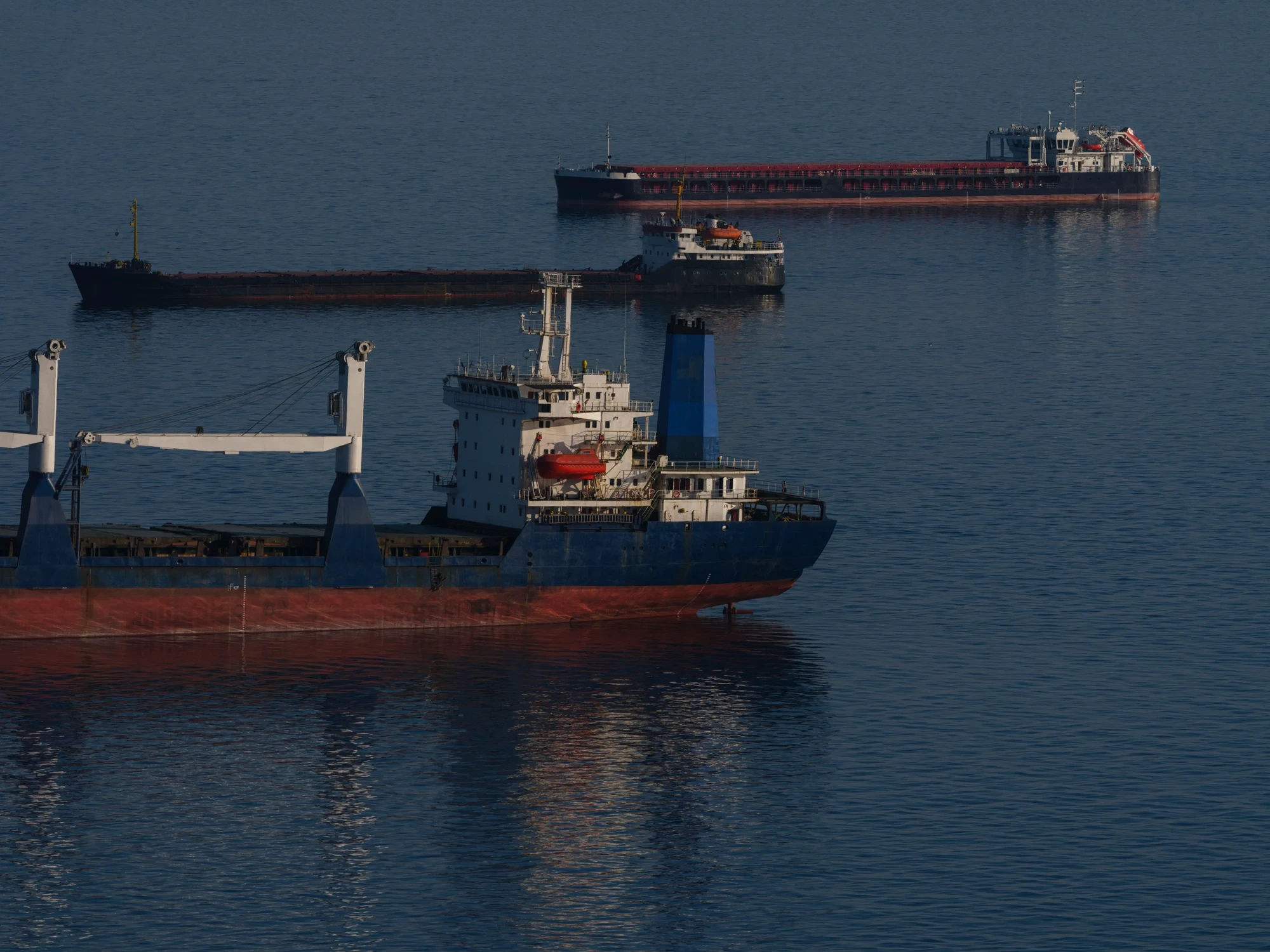
Each ship in the Paris MoU information system is given a profile of HRS, SRS or LRS. The profile determines inspection priority, interval and scope (paragraph 3.2 of the Memorandum). This article reads Annexes 7, 8 and 9 of the Memorandum including the 46th Amendment, adopted on 30 May 2025 and effective on 1 July 2025.
The frame of the calculation is the same as in Tokyo MOU. Weighting points are added to find an HRS, and an LRS has to meet every criterion. The values differ, so the same ship can get a different profile in each region. The frame itself is explained in the Tokyo MOU article, so this one covers the Paris MoU values and the rules found only in Paris MoU.
Scope: the criteria below apply only at ports and anchorages of Paris MoU Authorities. The membership of the Russian Federation has been suspended since 20 May 2022.
The frame is the same but the thresholds and points differ
Paris MoU values come from Table 1 of Annex 7 and from Annex 8. Tokyo MOU values come from Annex 2 of the Memorandum with the 23rd amendments.
| Item | Paris MoU | Tokyo MOU |
|---|---|---|
| HRS threshold | 5 points or more | 4 points or more |
| Ship type, 2 points | Chemical tanker, gas carrier, oil tanker, bulk carrier, passenger ship, NLS tanker | The first five and container ship. No NLS tanker |
| Age, 1 point | Over 12 years | Over 12 years |
| Flag | Black VHR, HR, M to HR 2 points, MR 1 point | Low 1 point |
| RO performance | Low, Very Low 1 point | Low, Very Low 1 point |
| Company performance | Low, Very Low 2 points | Low, Very Low 2 points. No inspections also 2 points |
| Deficiencies | No HRS points (Not eligible) |
1 point per inspection with over 5 deficiencies |
| Detentions, 36 months | 2 or more, 1 point | 3 or more, 1 point |
| Flag criteria for LRS | White list and IMO audit criterion met | Performance High |
| Band for company indices | Deficiency index 2, detention rate 2% from the average | Deficiency index 1, detention rate 1% from the average |
| HRS window | 5 to 6 months | 2 to 4 months |
| SRS window | 10 to 12 months | 5 to 8 months |
| LRS window | 24 to 36 months | 9 to 18 months |
Adding every weighting in the Paris MoU table gives a ceiling of 9 points, because the deficiency row carries none. An oil tanker over 12 years starts at 3 points, and a Low company takes it to 5 on its own. A Grey flag carries no points, but it is not White, so the ship cannot be an LRS.
The two company indices work as they do in Tokyo MOU. The band is twice as wide, so the same gap can stay Average in Paris MoU. The averages are also calculated separately for each region (Annex 7, paragraphs 19 and 21).
Deficiency counts do not become HRS points in Paris MoU
In the deficiency row of Table 1 the HRS box reads Not eligible. However many deficiencies one inspection records, this row gives no points. That does not take deficiencies out of the profile. They go to two places.
- One inspection in the last 36 months with more than 5 deficiencies removes LRS status.
- Deficiencies enter the company’s deficiency index, ISM deficiencies at 5 points and others at 1 (paragraph 17). A worse index reaches every ship of the company as 2 points through company performance.
Accidental damage is handled separately. A note in the Paris MoU model forms (PSCC 59/2026/13) says deficiencies marked as accidental damage are not counted for company performance and the ship risk profile. Detention is covered by paragraph 3.5 of the Memorandum. If the ground is accidental damage and four conditions are met, no detention order is issued. The conditions are the SOLAS notification to the flag and others, submission of the circumstances before entering port or right after the damage, remedial action to the Authority’s satisfaction, and confirmation that hazardous deficiencies have been addressed. The main text of the Tokyo MOU Memorandum has no equivalent provision.
Detentions score from two, and refusal of access moves a whole fleet
One detention in the last 36 months gives no weighting point and only removes LRS status. Two give 1 point. Tokyo MOU starts at three.
Paragraph 22 of Annex 7 is a rule the Tokyo MOU Memorandum does not have. If any ship in the fleet receives a Refusal of Access Order in the last 36 months, the company’s detention index is automatically above average, whatever the other inspection results. In Table 2 an above average detention index makes company performance low or very low whatever the deficiency index is. That puts 2 points on every ship in the fleet. A bulk carrier aged 13 years, at 3 points, becomes an HRS regardless of its own history.
The profile is recalculated daily and age runs from the keel-laying date
Paragraph 7 of Annex 7 says the profile is recalculated daily, because of moving values such as age, the 36-month history and company performance. It is also recalculated after every inspection and when the flag and RO performance tables change. So the profile can change without an inspection.
The Tokyo MOU Memorandum gives no starting date for age, but Paris MoU does in paragraph 9. It uses the keel-laying date in the information system. A hypothetical tanker with a keel-laying date of 2014-03-15 passes 12 years on 2026-03-15 and gains 1 point. If the system holds only the year, the date is 2026-12-31. Depending on how the record was entered, the day the point arrives moves by more than nine months.
The same three ships through both tables
All three ships are hypothetical. Flag, RO and company performance are rated separately in each region, so the rating in each region is assumed. The company is Medium in both regions.
| Item | Ship A (bulk carrier, 14 years) | Ship B (container ship, 15 years) | Ship C (general cargo, 13 years) |
|---|---|---|---|
| Flag | Paris White, Tokyo High | Paris White, Tokyo High | Paris Black HR, Tokyo Low |
| RO performance | High in both | High in both | Low in both |
| Deficiencies by inspection | 7, 3, 2 | 6, 2 | 4, 3 |
| Detentions, 36 months | None | None | 2 |
| Paris MoU points | Type 2 + age 1 = 3 | Age 1 = 1 | Age 1 + flag 2 + RO 1 + detention 1 = 5 |
| Paris MoU result | SRS, 10 to 12 months | SRS, 10 to 12 months | HRS, 5 to 6 months |
| Tokyo MOU points | Type 2 + age 1 + deficiency 1 = 4 | Type 2 + age 1 + deficiency 1 = 4 | Age 1 + flag 1 + RO 1 = 3 |
| Tokyo MOU result | HRS, 2 to 4 months | HRS, 2 to 4 months | SRS, 5 to 8 months |
- For Ship A, the one inspection with 7 deficiencies is the fourth point in Tokyo MOU. In Paris MoU the same inspection only removes LRS status.
- Ship B has no type points in the Paris MoU table. The gap is 3 points.
- Ship C goes the other way. The 2 points for the Black list and the 1 point for two detentions are added in Paris MoU only.
The window runs from the last inspection in the Paris MoU region
Paragraph 4 of Annex 8 measures the window from the last inspection in the Paris MoU region.
Periodic Inspections and Additional Inspections count equally.
That is from paragraph 5. After an additional inspection the time span to the next periodic inspection starts again. If a ship is not inspected once the window opens, paragraph 7 keeps it Priority II until the window closes, and then it becomes Priority I. In Table 3 the Priority I limits are 6 months for HRS, 12 months for SRS and 36 months for any ship.
Priority I also weighs differently. Paris MoU describes these as ships that must be inspected. Tokyo MOU says they are to be inspected where practical. Annex 11 limits how many Priority I inspections a Paris MoU Authority may miss.
The profile also sets the type of inspection
Table 4 of Annex 9 sets the type of periodic inspection.
| Profile and ship type | Type of periodic inspection |
|---|---|
| HRS | Expanded |
| SRS or LRS of a risk ship type over 12 years | Expanded |
| Other SRS or LRS | Initial. More detailed if clear grounds are found |
The risk ship types are chemical tanker, gas carrier, oil tanker, NLS tanker, bulk carrier and passenger ship. Container ships are not included. Section 2.5 of PSCC 59/2026/02 lists the same group. Ship A above gets an Expanded inspection even as an SRS, and Ship B an Initial one. A More detailed inspection must include at least one operational control (same instruction).
Paragraph 2.1 of Annex 2 in the Tokyo MOU Memorandum also says the profile sets the scope, but its text has no table like this.
Worth confirming
This article leaves some things out because the Memorandum does not answer them.
- The current BGW list, the RO and company ratings and the Paris MoU averages. The formulas point to the Annual Report, and the list of flags meeting the LRS criteria is kept on the Paris MoU website.
- The exact list of ship type names. Paragraph 8 only refers to a list adopted by the Committee.
- The details of the Annex 11 miss percentages and postponement conditions.
The detention rate table in Annex 7 writes 2 without a unit in the above and below rows and 2% in the average row. This article reads all three as 2%.
At ports of EU Member States the framework of Directive 2009/16 and its amending Directive 2024/3099 also applies. Table 1 does not contain the environmental indicator added by the amending Directive. Check the port State’s implementing law in a real case. The Memorandum keeps being amended, so check the latest edition on the Paris MoU site before calculating.
You can consult the cited source documents
These links lead to the official publishers of the documents discussed here. Match the edition and provisions cited in the article, and check subsequent amendments and flag-state implementation before applying them.
- Paris MoU · Memorandum, 46th Amendment
- Paris MoU · PSCC 59/2026/02
- Paris MoU · PSCC 59/2026/13
- Tokyo MOU · Memorandum, 23rd amendments
Continue with the related operational guidance
Bellbook is an operations platform for shipping companies: planned maintenance and certificates, audit prep, crew HR and payroll, and voyage reporting in one place.
Start for freeRelated reading
- How reports from pilots and port authorities lead to a PSC inspection (EU Directive 2009/16 Article 23)Inspections and audits
- Sailing conditions for unrectified PSC deficiencies and the repair yard notification (EU Directive 2009/16 Article 21)Inspections and audits
- Scope of the right of appeal against a PSC detention and the professional profile of inspectors (EU Directive 2009/16)Inspections and audits