How reports from pilots and port authorities lead to a PSC inspection (EU Directive 2009/16 Article 23)
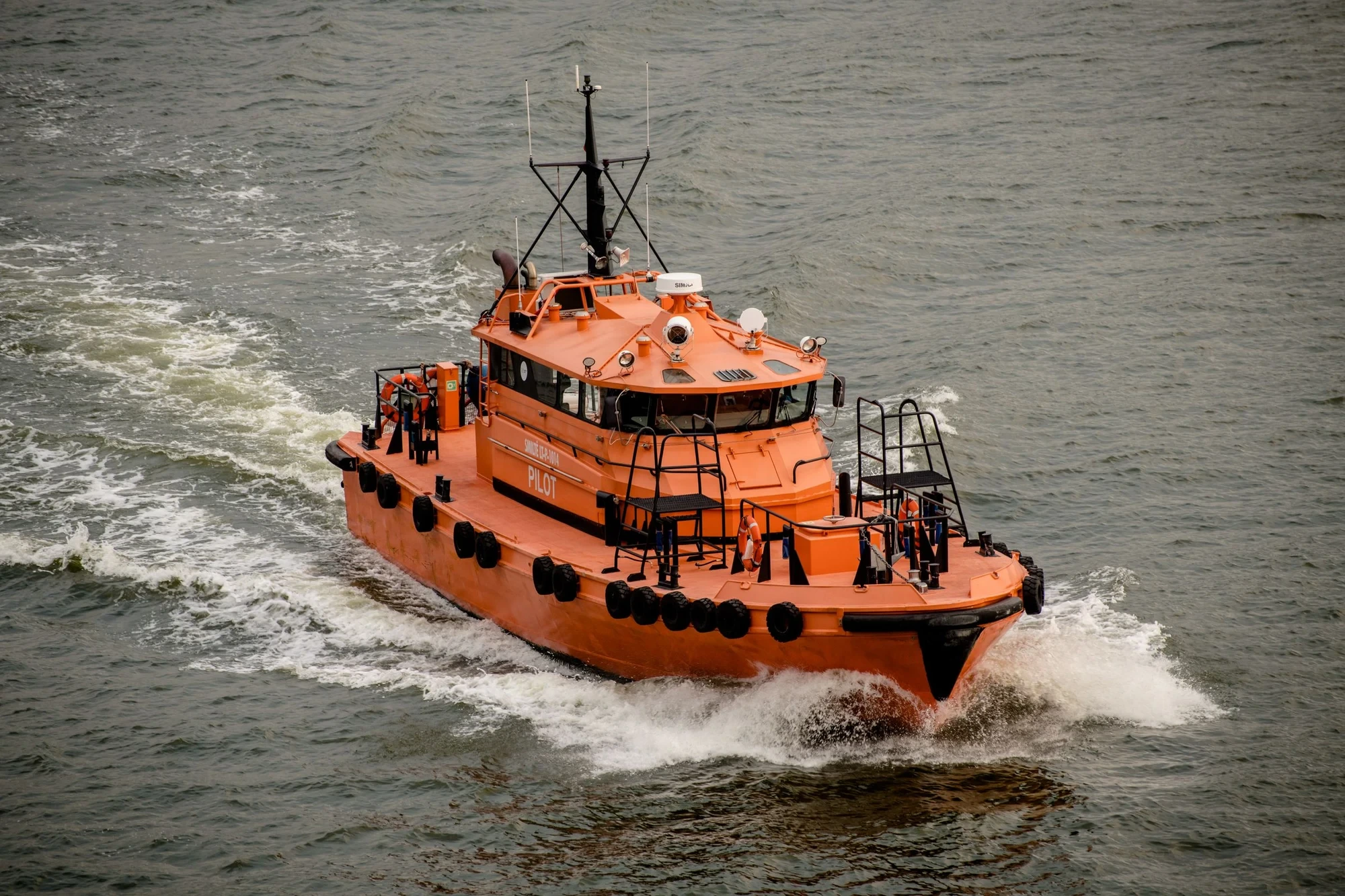
Article 23 of EU Directive 2009/16 requires pilots and port authorities to report anomalies they see on board to the competent authority of the port State. The report does not end there. It becomes an unexpected factor under Annex I that opens an additional inspection, and an example of clear grounds under Annex V that leads to a more detailed inspection.
Without this path there is no way to know why an inspection came. If the inspector comes aboard while the ship risk profile says the next inspection is still far off, an anomaly reported during inbound pilotage may be the starting point. Knowing what goes into the report is what lets the ship prepare what to explain.
Scope: This Directive is a regional regime that applies to ships calling at ports and anchorages of EU Member States. The reporting duty in Article 23 is a duty Member States place on their own pilots and port authorities, not a duty placed directly on the ship. It is not a worldwide obligation. It is a procedure that operates in EU ports.
Pilots inform the authority of the port State or the coastal State immediately
- Member States shall take appropriate measures to ensure that their pilots who are engaged in the berthing or unberthing of ships, or who are engaged on ships bound for a port or in transit within a Member State, immediately inform the competent authority of the port State or the coastal State, as appropriate, whenever they learn in the course of their normal duties that there are apparent anomalies which may prejudice safety, including the safe navigation of the ship or the safety of seafarers on board, or which may pose a threat of harm to the marine environment.
The reporting party is the pilot. Not only pilots engaged in berthing and unberthing, but also pilots on ships bound for a port in a Member State and on ships in transit within a Member State. The recipient is the competent authority of the port State or the coastal State, as the situation requires.
What is reported is apparent anomalies. Anomalies that may prejudice safety, among them the safe navigation of the ship and the safety of the seafarers on board, and anomalies that may pose a threat of harm to the marine environment. The timing is immediately. The pilot informs as soon as he learns of it in the course of normal duties.
This paragraph and paragraph 2 carry the ▼M6 marker in the consolidated text. The wording was amended by Directive 2024/3099. Whether a Member State has transposed that amendment is checked with the port State concerned.
Port authorities report ships inside their own port
- If port authorities or bodies, in the course of their normal duties, learn that a ship within their port has apparent anomalies which may prejudice safety, including the safe navigation of the ship or the safety of seafarers on board, or which may pose a threat of harm to the marine environment, such authority or body shall immediately inform the competent authority of the port State.
The second reporting party is port authorities and port bodies. They report the same kind of anomaly at the same moment as pilots. The difference is reach. A port authority sees ships inside its own port. The recipient is also fixed as one, the competent authority of the port State.
In both paragraphs what matters is that the reporting party is not an inspector. Pilots and port authorities do not inspect. They pass on what they saw in the course of normal duties. The judgement is for the authority that receives it.
The report carries three bundles of information
- Member States shall require pilots and port authorities or bodies to report at least the following information, in electronic format whenever possible: — ship information (name, IMO identification number, call sign and flag), — sailing information (last port of call, port of destination), — description of apparent anomalies found on board.
Paragraph 3 fixes the minimum content of the report. It is sent in electronic format whenever possible.
| Bundle | Items included |
|---|---|
| Ship information | name, IMO number, call sign, flag |
| Sailing information | last port of call, port of destination |
| The anomaly | description of the apparent anomalies found on board |
The sailing information includes the port of destination. The authority receiving the report knows which port the ship goes to next. That is why the anomaly can come back as an inspection at that port.
Member States take follow-up action and record it
- Member States shall ensure that proper follow-up action is taken on apparent anomalies notified by pilots and port authorities or bodies and shall record the details of action taken.
Receiving the report is not the end. The Member State has to take proper follow-up action on the reported anomaly and record the details of the action taken. What the follow-up action is, this paragraph does not say. It may be an inspection or it may be something else.
Paragraph 5 confers implementing powers on the Commission. The measures harmonise the procedures for reporting anomalies by pilots and port authorities and for reporting follow-up actions taken by Member States. That means the forms and procedures can differ between Member States, and the common procedure is checked in the implementing act.
A reported ship becomes an unexpected factor and a candidate for additional inspection
Ships which have been reported by pilots or port authorities or bodies as having apparent anomalies which may prejudice their safe navigation or pose a threat of harm to the environment in accordance with Article 23 of this Directive. Those reports may include information from Vessel Traffic Services about ships’ navigation.
Annex I, Part II 2B is the list of unexpected factors. A ship reported under Article 23 sits on that list as one line. The reports may include navigation information from Vessel Traffic Services. That means a track the pilot never saw can also become part of the report.
Where an unexpected factor arises, Article 11(b) allows an additional inspection regardless of the period since the last periodic inspection. It is a discretion to inspect, not a duty to inspect.
ships to which unexpected factors listed in Annex I, Part II 2B, apply may be inspected. The decision to undertake such an additional inspection is left to the professional judgement of the competent authority.
Article 12 places that discretion in the selection scheme. Ships due for a mandatory inspection are Priority I, and ships eligible for inspection are Priority II. Unexpected factors are joined by may, so they sit on the Priority II side. Whether to inspect is left to the professional judgement of the competent authority.
A reported ship is also among the examples of clear grounds for a more detailed inspection
A more detailed inspection shall be carried out, including further checking of compliance with on-board operational requirements, whenever there are clear grounds for believing, after the inspection referred to in point 1, that the condition of a ship or of its equipment or crew does not substantially meet the relevant requirements of a Convention.
Article 13(3) requires a more detailed inspection where clear grounds exist after the initial inspection. Clear grounds exist when the inspector finds evidence which in his professional judgement warrants a more detailed inspection. The examples are in Annex V.
- Ships identified in Annex I, Part II 2A and 2B.
The first item of Part A of Annex V is ships identified in Annex I, Part II 2A and 2B. A ship that entered 2B through an Article 23 report enters the examples of clear grounds through this item. The path runs in two steps. The report opens an additional inspection, and the same report can widen that inspection from an initial inspection to a more detailed one.
| Step | Provision | Effect |
|---|---|---|
| Report | Article 23(1) and (2) | the competent authority learns of the anomaly |
| Additional inspection | Article 11(b), Annex I 2B | the ship may be inspected regardless of the inspection interval |
| More detailed inspection | Article 13(3), Annex V | the example of clear grounds opens a more detailed inspection |
Worth confirming
The passages above come from Articles 11, 12, 13 and 23 of the consolidated text of EU Directive 2009/16 and from Annex I, Part II and Annex V. This article covers the consolidated text only.
The implementing act that sets the harmonised reporting procedure under Article 23(5) is not covered here. The conditions under which an inspection opened by an unexpected factor becomes an expanded inspection are in Annex I, Part II 3B and are outside this article. Which authority a pilot’s report reaches depends on how the port State and the coastal State are organised, so it is checked in the implementing law of that country.
You can consult the cited source documents
These links lead to the official publishers of the documents discussed here. Match the edition and provisions cited in the article; for EU legislation, also consult the consolidated versions and amendment history on the document page.
Continue with the related operational guidance
An anomaly a pilot saw comes back as a deficiency at the next port's inspection. Bellbook takes a deadline, a root cause and a corrective action for each entry in the non-conformity and PSC deficiency register, and stacks them by date for each ship.
Start for freeRelated reading
- The order and duration of the Interim DOC and Interim SMC on the day the company changes (ISM Code chapter 14)Inspections and audits
- Seven HSSC survey types, the anniversary window, where the new period starts by renewal timing and how an extension is counted (Resolution A.1120(30))Inspections and audits
- Who may carry out weekly and monthly inspections and the annual and five-year thorough examinations of lifeboats, launching appliances and release gear (MSC.402(96))Inspections and audits