Conditions for a single voyage to a repair port for accidental damage deficiencies in the Paris MoU, and the two FUD forms (PSCC 53/2020/11)
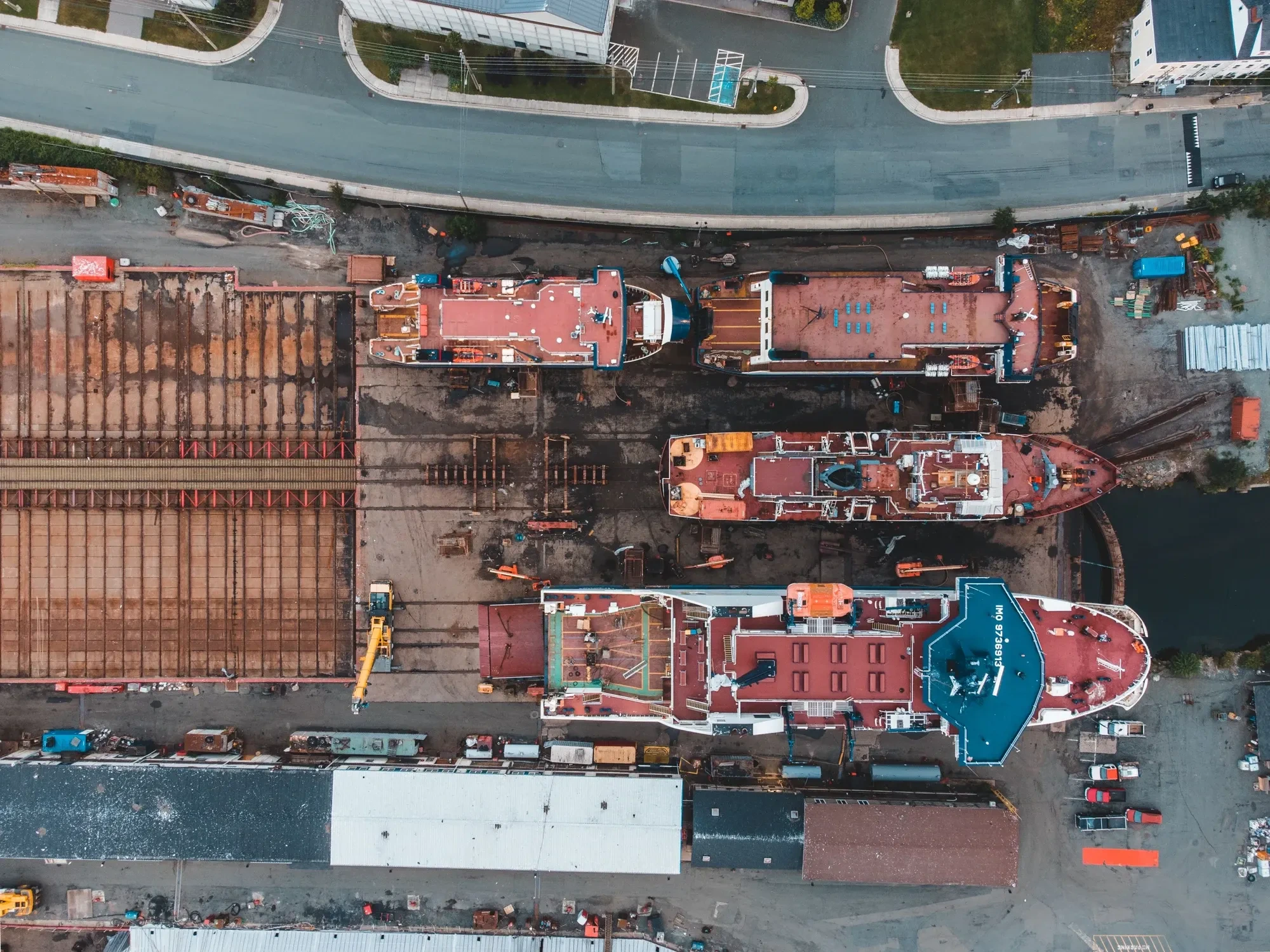
When a ship damaged in an accident at sea enters a Paris MoU port, the damage may not lead to a detention order even if it would otherwise be a detainable deficiency. That is the accidental damage route in section 3.5 of the Memorandum.
The problem is when the damage cannot be repaired in that port. PSCC 53/2020/11 guides the PSCO on allowing a single voyage to a repair port in that case. On its first page the instruction says it is solely guidance for the PSCO, does not restrict the scope of inspection or professional judgement, and that third parties cannot claim any rights based on it.
Scope: This applies to ships with accidental damage deficiencies recorded in the ports and anchorages of Paris MoU member Authorities. The procedure for sending a detained ship to a repair yard is in a separate instruction, PSCC 53/2020/06, and only the differences are compared below.
Accidental damage prevents a detention order, but the deficiency is still recorded
Section 3.5 of the Memorandum says that where the ground for detention is the result of accidental damage suffered by the ship, no detention order is issued if all four conditions are met.
- Due account has been given to the notification requirements of SOLAS regulation I/11(c). This is notification to the flag Administration, the nominated surveyor or the recognized organization (RO) responsible for issuing the relevant certificate.
- Before entering port or immediately after the damage, the master or shipowner has submitted to the port State control authority details of the circumstances of the accident, the damage suffered and information about the notification of the flag Administration.
- Appropriate remedial action, to the satisfaction of the Authority, is being taken by the ship.
- Having been notified of the completion of the remedial action, the Authority has ensured that deficiencies clearly hazardous to safety, health or the environment have been addressed.
The definitions instruction PSCC 58/2025/17 defines accidental damage related deficiencies as detainable deficiencies for which the detention order is not issued because the conditions of section 3.5 are met. The deficiency itself does not disappear. Section 3.6 of the general principles instruction PSCC 59/2026/02 says it is recorded in the inspection report as to be rectified before departure. The detention instruction PSCC 59/2026/03 also says code 17 (rectify before departure) is used for accidental damage deficiencies.
The report has a separate accidental damage box, ticked only for deficiencies to which section 3.5 applies. A footnote to Form B in the model forms instruction PSCC 59/2026/13 says deficiencies with this mark are not taken into account in calculating company performance and the ship risk profile.
The report made before entering port is the first step
Of the four conditions, the second is the one the ship can prepare on its own. The circumstances of the accident and the damage must reach the port State control authority before entering port or immediately after the damage. An explanation first offered after the inspection has started does not match the timing of this condition.
Section 11 of Annex 8 of the Memorandum lists ships involved in a collision, grounding or stranding on their way to port as an overriding factor triggering an additional inspection at Priority I. The same Annex defines Priority I ships as ships that must be inspected. The conditions of section 3.5 are checked at that inspection.
The repair port procedure runs in eight steps from application to arrival notice
The general section of 53/2020/11 says that from a technical point of view there is no difference between a detainable and an accidental damage deficiency. So when the ship cannot rectify in the port of inspection, a single voyage to a repair port may apply. The eight steps of section 3, set out by actor, are as follows.
| Step | Actor | Action | Form |
|---|---|---|---|
| 3.1 | Company or master | Apply to proceed to a repair port, with written confirmation of a repair contract or supply of equipment | |
| 3.2 | Flag State or RO | Confirm permission to proceed to the nearest available and appropriate repair port and advise the voyage conditions | FUD 1 AD |
| 3.3 | Flag State or RO | Issue single voyage certificates, or preferably endorse existing certificates | |
| 3.4 | PSCO | Obtain confirmation from the repair port authority of acceptance, adherence to the MoU communication procedure and an additional inspection | FUD 1 AD |
| 3.5 | PSCO | Inform the master of the conditions and the consequences of breaching them | FUD 2 AD |
| 3.6 | PSCO | Inform the master that the repair port authority must notify arrival in writing | FUD 2 AD |
| 3.7 | PSCO | Enter the repair port and ETA in the inspection report | |
| 3.8 | Releasing port authority | Inform the repair port authority, flag State and RO of the departure and ETA | FUD 2 AD |
Steps 3.5 and 3.8 are passive sentences that do not say who informs whom. Step 3.6 names the repair port authority as the one giving the arrival notice, but not who tells the master. Step 3.7 concerns what goes in the report. Both forms are issued by the PSC office of the releasing port and signed by the PSCO, so the table names that side as the actor.
The voyage conditions must be acceptable to the port State, and the port State may add conditions in agreement with the flag State or RO (3.2). Most steps are written with should, and only the arrival notice in 3.6 uses must.
A ballast voyage is the rule and cargo already on board is the exception
Step 3.3 sets the basics of the voyage conditions. The voyage is in ballast and excludes any commercial operations. The ship may also be towed if documents such as a load line exemption or fitness for towage are available.
The exception is cargo already on board. Only when it is safe to do so, it may be carried to the repair port or specified intermediate ports. Those ports are informed and included in the voyage conditions on FUD 2 AD. In other words, to call at an intermediate port to discharge cargo, that port has to be written on the form.
The repair port may be outside the Paris MoU region
the repair port is not required to be in the Paris MoU Region
That is the note to 3.2. If the conditions are fulfilled, the repair port need not be inside the Paris MoU region. The confirmation in 3.4 is still needed. The PSCO allows departure only once the repair port authority confirms it will accept the ship, adhere to the MoU communication procedure and carry out an additional inspection.
The detained ship procedure, 53/2020/06, adds to the same note that in such a case the ship will be liable for re-inspection in the first Paris MoU port after the repairs. 53/2020/11 has no such sentence.
No arrival notice after the ETA is treated as a breach
FUD 2 AD is a notice the master signs. The master must ask the repair port authority to inform the releasing port authority of the ship’s arrival. The form says that no confirmation of arrival after the ETA will be considered evidence that the ship has not complied with the voyage conditions.
Changing the conditions requires consultation with the office named on the form. Force majeure is the exception, and even then that office should be informed as soon as practicable.
If the ship does not call at the agreed repair port or breaches the conditions, the form warns that it may be subject to an additional inspection at its first call in the Paris MoU region. In that case the releasing port authority enters an overriding message in THETIS so that the inspection actually takes place (3.5).
The schedule below is invented for illustration.
| Date | Event |
|---|---|
| 2026-11-01 | Contact accident before entering port. The master sends the port State the circumstances, damage and flag notification details |
| 2026-11-02 | Inspection. Bow shell plating damage marked as accidental damage, code 17 |
| 2026-11-03 | Repair impossible in that port. The company applies for the repair port voyage with a repair contract |
| 2026-11-04 | Flag confirmation and conditions, repair port authority confirmation. Action code 48. The master signs FUD 2 AD and sails |
| 2026-11-07 | Repair port ETA in the report. The repair port authority’s arrival notice must arrive by this day |
If no notice has arrived after 7 November, evidence of a breach exists on the form even if the ship actually reached the repair port. The repair port authority sends the arrival notice, but the master is the one who asks for it.
The same repair voyage carries different forms and consequences depending on detention
Setting it beside the case of a detained ship sent to a repair yard shows the differences.
| Item | Accidental damage, rectified in port | Accidental damage, single voyage to repair port | Detained ship, sailing to repair yard |
|---|---|---|---|
| Detention order | None | None | Yes |
| Action code | 17 |
48 |
46 |
| Instruction | PSCC 59/2026/03 | PSCC 53/2020/11 | PSCC 53/2020/06 |
| Forms | None | FUD 1 AD, FUD 2 AD | FUD 1, FUD 2 |
| Consequence stated on the form | Not applicable | Possible additional inspection at the first Paris MoU call | Possible refusal of entry to all Paris MoU ports and anchorages |
Code 48 is the code for deficiencies covered by an accepted flag State condition. The detention instruction says it is used for unrectified accidental damage deficiencies where a flag State condition has been accepted or the ship has been authorized to call at a repair port. Code 46 is used only for detainable deficiencies, and once the ETA passes it generates an unexpected factor that makes the ship eligible for an additional inspection.
The detained ship instruction 53/2020/06 defines an available repair yard as one able to start the repairs normally within 7 days of the ship’s arrival. 53/2020/11 has no such definition. A detained ship that does not call at the repair yard may face refusal of access under section 4.2 of the Memorandum, and lifting that refusal requires a re-inspection at the company’s expense.
Worth confirming
This article leaves some things out because the Paris MoU instructions and the Memorandum compared here do not answer them.
- The text of the notification requirements in SOLAS regulation I/11(c). The Memorandum only gives the regulation number, and the SOLAS text was outside this comparison.
- The test for the nearest available and appropriate repair port on an accidental damage single voyage. 53/2020/11 gives no definition.
- Whether an accidental damage ship that fails to call at the repair port can go beyond an additional inspection to a refusal of access. 53/2020/11 and FUD 2 AD mention only the additional inspection. The refusal of access in section 4.2 of the Memorandum also refers only to ships under sections 3.4 and 3.8, and does not mention accidental damage ships under section 3.5.
- The range of conditions the port State may add and the form of the single voyage certificate. The flag State and RO decide these.
National measures remain as a blank on the form for national regulations. Before responding, check the guidance of the port State concerned and the latest edition on the Paris MoU site.
You can consult the cited source documents
These links lead to the official publishers of the documents discussed here. Match the edition and provisions cited in the article, and check subsequent amendments and flag-state implementation before applying them.
- Paris MoU · PSCC 53/2020/11
- Paris MoU · Memorandum, 46th Amendment
- Paris MoU · PSCC 59/2026/03
- Paris MoU · PSCC 59/2026/02
- Paris MoU · PSCC 58/2025/17
- Paris MoU · PSCC 59/2026/13
- Paris MoU · PSCC 53/2020/06
Continue with the related operational guidance
To be treated as accidental damage, the circumstances of the accident and the damage must reach the port State before entering port or immediately after the damage. The Bellbook incident and near miss report lets the ship upload photos, the category (collision, grounding, contact, flooding and others), the date, location, circumstances and immediate action, and the shore office continues the same record with causes and corrective action.
Start for freeRelated reading
- PSC inspections of ships carrying industrial personnel, application, headcount, training records and detention grounds (Paris MoU PSCC 57/2024/06)Crew and labour
- How Paris MoU PSCOs match seafarer certificates, flag State endorsements and the minimum safe manning document (PSCC 57/2024/05)Crew and labour
- Paris MoU load line inspections, matching documents, closing devices and marks, and when overloading leads to detention (PSCC 58/2025/12)Inspections and audits