Oil Record Book Part I operations to be entered and the signature and retention rules (MARPOL Annex I Regulation 17)
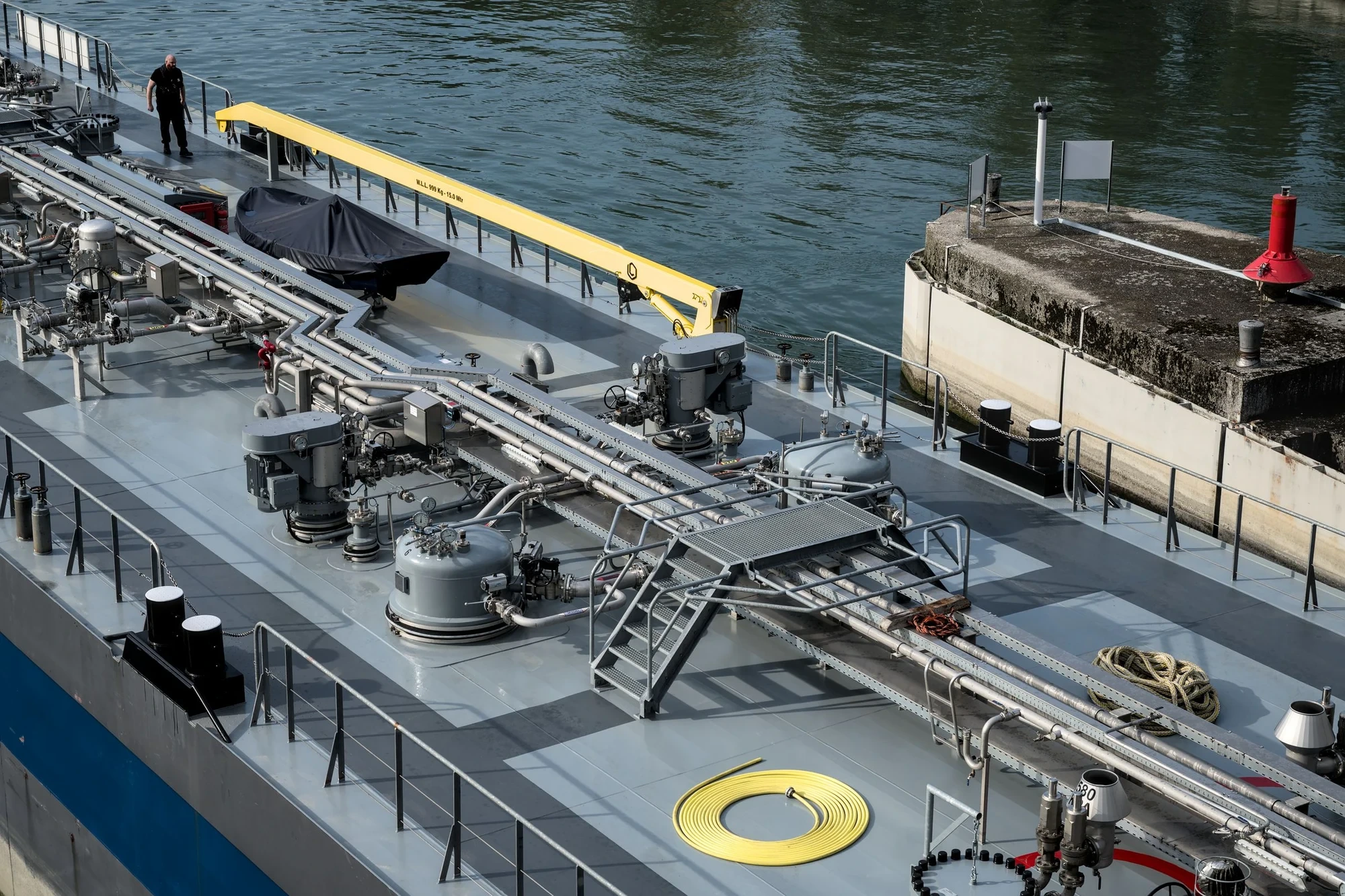
Regulation 17 of MARPOL Annex I deals with Oil Record Book Part I, the book for machinery space operations. Which ships carry it, which operations go in, who signs, how many years it stays where, and what a port State may do with it all sit inside one regulation.
This book is the only evidence of oil handling the ship produces for itself. An empty line does not mean the operation did not happen. It means the operation was not recorded. When a port State inspects the book and takes a certified copy, that copy becomes evidence in court. So a gap in the entries reads as a gap in the ship.
This article follows the seven paragraphs of regulation 17 in order and attaches the item codes of appendix III as a table.
The threshold for carrying the book differs between tankers and other ships
1 Every oil tanker of 150 gross tonnage and above and every ship of 400 gross tonnage and above other than an oil tanker shall be provided with an Oil Record Book Part I (Machinery Space Operations). The Oil Record Book, whether as a part of the ship’s official log-book or otherwise, shall be in the Form specified in appendix III to this Annex.
There are two thresholds. Oil tankers from 150 gross tonnage, other ships from 400. A tanker carries Part II (cargo and ballast operations) separately, but Part I applies to tankers as well. Every ship has a machinery space.
The form is fixed by appendix III. The book may be part of the official log-book or kept separately, but the form cannot be changed.
Five machinery space operations are the subject of entries
2 The Oil Record Book Part I shall be completed on each occasion, on a tank-to-tank basis if appropriate, whenever any of the following machinery space operations takes place in the ship: .1 ballasting or cleaning of oil fuel tanks; .2 discharge of dirty ballast or cleaning water from oil fuel tanks; .3 collection and disposal of oil residues (sludge and other oil residues); .4 discharge overboard or disposal otherwise of bilge water which has accumulated in machinery spaces; and .5 bunkering of fuel or bulk lubricating oil.
The standard is on each occasion. An entry is made every time an operation takes place. And it is on a tank-to-tank basis. Two tanks are not folded into one line; each tank gets its own.
Appendix III divides these five operations into letter codes. When making an entry, the date, the code letter and the item number go in the columns and the particulars are recorded in chronological order.
| Operation in regulation 17.2 | Appendix III code | What is recorded |
|---|---|---|
| Ballasting or cleaning of oil fuel tanks | (A) | Tank, cleaning method, time and position at start and completion |
| Discharge of dirty ballast or cleaning water from oil fuel tanks | (B) | Tank, position at start and completion, speed, method of discharge, quantity |
| Collection and disposal of oil residues (sludge) | (C) | Quantity retained (weekly), method of disposal and quantity |
| Non-automatic discharge or disposal of machinery space bilge water | (D) | Quantity, time, method (15 ppm equipment, reception facility, transfer) |
| Automatic discharge of machinery space bilge water | (E) | Time and position when put into automatic mode, time returned to manual |
| Condition of the oil filtering equipment | (F) | Time of failure, time made operational, reasons |
| Accidental or other exceptional discharges | (G) | Time, position, type and approximate quantity, circumstances |
| Bunkering of fuel or bulk lubricating oil | (H) | Place, time, type and quantity, tank |
| Additional operational procedures and general remarks | (I) | Free text |
One number hides in code (C). The quantity of oil residues retained on board is recorded weekly. Even when a voyage runs past a week, it is recorded once a week. It is the only entry that arises without an operation.
Exceptional discharges and equipment failures are entered with the circumstances and the reasons
3 In the event of such discharge of oil or oily mixture as is referred to in regulation 4 of this Annex or in the event of accidental or other exceptional discharge of oil not excepted by that regulation, a statement shall be made in the Oil Record Book Part I of the circumstances of, and the reasons for, the discharge.
A discharge under the exceptions of regulation 4 (securing safety, saving life, damage) is entered. An accidental discharge that does not fall under those exceptions is entered too. Both require the circumstances of, and the reasons for the discharge. The fact that a discharge occurred does not complete the entry.
5 Any failure of the oil filtering equipment shall be recorded in the Oil Record Book Part I.
A failure of the oil filtering equipment is entered even when nothing was discharged. Code (F) of appendix III is its place. It asks for the time of failure, the time the system was made operational, and the reasons. If the hours the equipment stood idle vanish from the record, so does any way of explaining where the bilge water of those hours went.
The officer in charge signs each operation and the master signs each page
4 Each operation described in paragraph 2 of this regulation shall be fully recorded without delay in the Oil Record Book Part I, so that all entries in the book appropriate to that operation are completed. Each completed operation shall be signed by the officer or officers in charge of the operations concerned and each completed page shall be signed by the master of ship.
The timing is without delay. The entry is made as soon as the operation is finished. Signatures come in two layers. When one operation is completed, the officer in charge of it signs. When one page is completed, the master signs. Because the master’s signature is per page, entries on a page not yet full carry only the officer’s signature.
The entries in the Oil Record Book Part I, for ships holding an International Oil Pollution Prevention Certificate, shall be at least in English, French or Spanish. Where entries in an official national language of the State whose flag the ship is entitled to fly are also used, this shall prevail in case of a dispute or discrepancy.
A ship holding an IOPP Certificate writes in English, French or Spanish. Where the flag State’s official language is also used, that language prevails in a dispute. A ship writing in two languages has to keep the two entries saying the same thing. If they diverge, the flag-language entry is the answer.
The book stays on board for three years after the last entry
6 The Oil Record Book Part I, shall be kept in such a place as to be readily available for inspection at all reasonable times and, except in the case of unmanned ships under tow, shall be kept on board the ship. It shall be preserved for a period of three years after the last entry has been made.
The place of retention is the ship. The only exception is an unmanned ship under tow. The period is three years, counted from the last entry. It is not counted from the day a volume was filled but from the day its last line was written. Sending a completed volume to the shore office breaks this paragraph.
A port State may inspect the book and require a certified copy
7 The competent authority of the Government of a Party to the present Convention may inspect the Oil Record Book Part I on board any ship to which this Annex applies while the ship is in its port or offshore terminals and may make a copy of any entry in that book and may require the master of the ship to certify that the copy is a true copy of such entry.
The port State has three powers. It may inspect, it may make a copy, and it may require the master to certify a true copy. A copy certified by the master is admissible in legal proceedings as evidence of the facts stated in the entry. So the entry is not a note kept inside the ship but a document that leaves it.
The same paragraph also binds the authority. Inspection and copying are performed as expeditiously as possible without causing the ship to be unduly delayed.
Worth confirming
The passages above come from regulation 17 and appendix III of the revised Annex I adopted by resolution MEPC.117(52). Resolution MEPC.187(59) later changed the wording of regulation 17.2.3. It replaced sludge with oil residue (sludge) and deleted and other oil residues. The current form of the book follows that wording.
This article is written for the paper book. How an Administration approves an electronic record book is settled by another resolution and is not covered here. Part II for oil tankers (regulation 36) is not covered either. The conditions attached to the exceptions in regulation 4 have to be read in that regulation itself.
You can consult the cited source documents
These links lead to the official publishers of the documents discussed here. Match the edition and provisions cited in the article, and check subsequent amendments and flag-state implementation before applying them.
Continue with the related operational guidance
The bunkering entry under code (H) comes from the place, the time, the grade, the quantity and the tank. Bellbook takes fuel received and consumption by consumer from the port call reports and the Noon report, so the figures to be copied into the record book sit in one place.
Start for freeRelated reading
- What each ship type records as cargo carried per voyage under EU MRV (EU Regulation 2016/1928)Environment and regulation
- Three ways an electronic record book differs from paper and the Administration's declaration (MEPC.314(74) and MEPC.312(74))Environment and regulation
- Entry into force and application dates of the Canadian Arctic and Norwegian Sea emission control areas (MEPC.392(82))Environment and regulation