Operational controls and drill scenarios in Paris MoU more detailed inspections, and the unsatisfactory drill report left on detention (PSCC 58/2025/07)
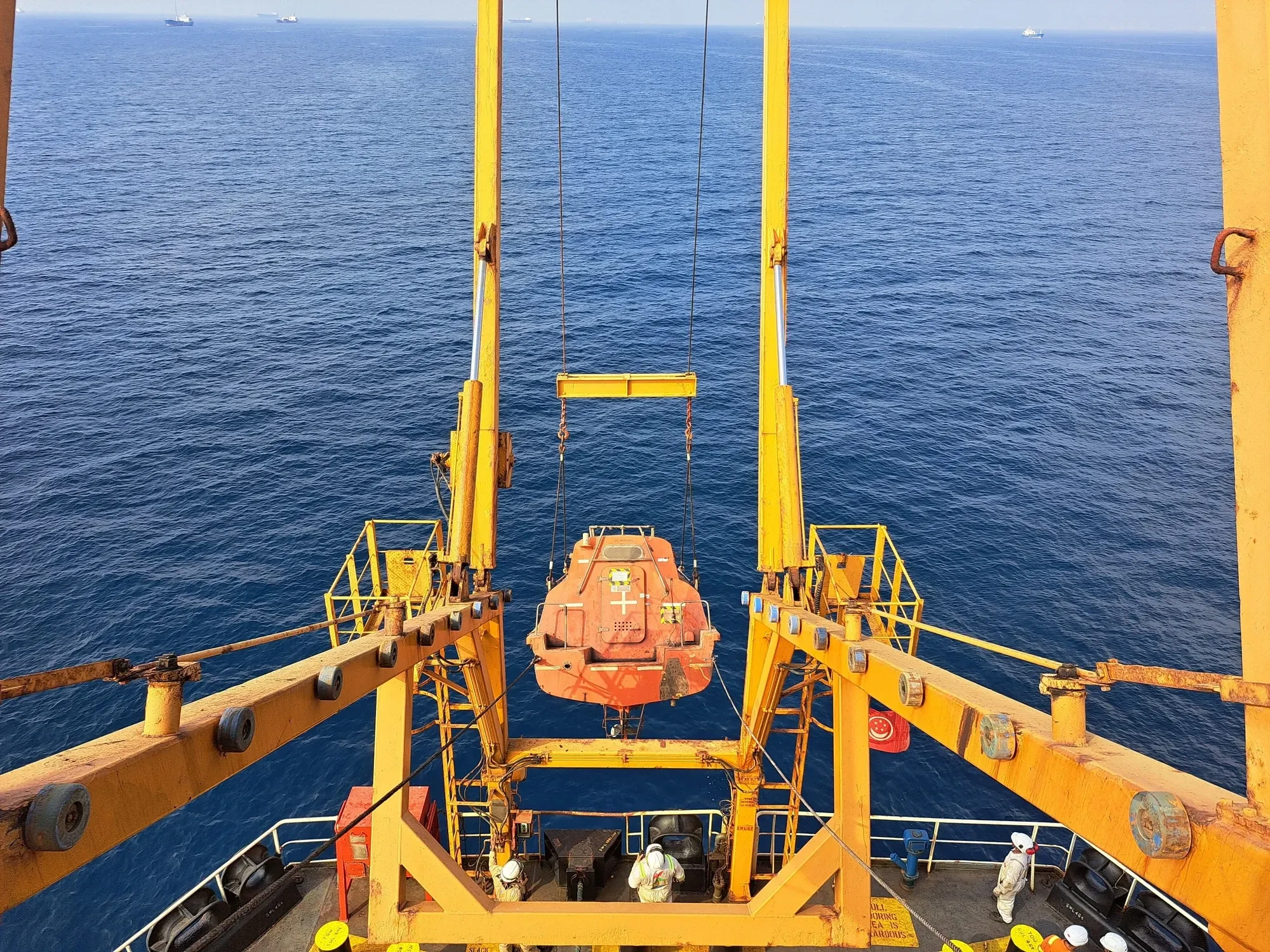
In the Paris MoU region, whether the PSCO asks for a drill depends on the type of inspection. The general principles instruction PSCC 59/2026/02 says an initial inspection may include functional tests but never an operational control (section 2.2). It says a more detailed inspection must include at least one operational control (section 2.4).
Operational control is a term defined in the definitions instruction PSCC 58/2025/17. It is a control to check the effectiveness, communication, interaction and familiarity of the crew, including processes, procedures and the human interface. The drill is its main form. PSCC 58/2025/07 is the instruction on how the PSCO prepares, witnesses and records drills.
PSCC Instructions are guidance for PSCOs. Section 1.1 of 59/2026/02 says they do not restrict the PSCO in the scope of inspection or in using professional judgement. What follows is the framework the PSCO starts from, not a ceiling on the drills a ship may be asked to do.
Scope: This applies to ships undergoing a more detailed or expanded inspection in the ports and anchorages of Paris MoU member Authorities. Items that apply only to passenger ships are identified in the text.
No drill is required at an initial inspection
Setting the three inspection types against operational control in the wording of the instructions gives the following.
| Inspection type | Operational control | Source |
|---|---|---|
| Initial inspection | Functional tests are allowed but never an operational control | PSCC 59/2026/02 section 2.2 |
| More detailed inspection | At least one is included | PSCC 59/2026/02 section 2.4 |
| Expanded inspection | Operational controls are included | Definition of expanded inspection in PSCC 58/2025/17 |
A functional test proves the correct operation of a single item of equipment and may be done in any of the three inspections. An operational control looks at how the crew acts, not at the equipment.
Because an initial inspection never includes an operational control, a PSCO who asks for a drill is already carrying out a more detailed or expanded inspection. Drill records are still checked as documents at an initial inspection. The document list in Annex 10 of the Memorandum includes the ship’s log book with respect to the records of drills.
The master agrees the areas, and the crew is not told the content in advance
Sections 2.1 and 2.2 set out how a drill is prepared.
- Areas and methods such as fire, man overboard (MOB), enclosed space entry or evacuation drills are agreed at the master’s discretion.
- The master is instructed to tell the crew only that a drill will take place. Mentioning the content and areas could give a distorted picture of the crew’s performance in an emergency.
- The PSCO devises the scenario in conjunction with the master. The instruction says that when the PSCO devises and controls the scenario, the ship’s officers do not know how it will progress, which makes the assessment closer to reality.
- The PSCOs and key ship’s personnel meet before and after the exercise. The initial briefing lets the ship’s staff recognise the PSCOs, and high visibility waistcoats are recommended for them.
- If there are passengers, the drill is announced in the relevant languages for the route, repeated at intervals during the drill, and its completion is announced.
The master also has grounds to stop it. The PSCO must not request operational controls or impose physical demands which, in the master’s judgement, could jeopardise the safety of the ship, crew, passengers or cargo (section 2.2 .2). As far as possible the PSCO does not interfere with cargo or ballast operations, and does not require demonstrations that could unnecessarily delay the ship (section 2.2 .3). Drills are carried out at a safe speed and need not run in real time. They are stopped if the crew carry out unsafe practices or there is a real emergency (section 2.2 .4).
The standard scenario runs in four phases from fire to abandonment
Annex 1, 1.1 offers a standard scenario in four phases that can be adapted to the ship type.
- Incident: a fire report or alarm reaches the bridge and an incident party responds.
- Fire alarm: it grows into a major fire and fire, boundary cooling, evacuation and closing down parties are deployed.
- Muster: personnel are mustered at a time set by the master and lifeboats are prepared.
- Abandon ship: the fire fighters withdraw and the crew abandon ship. Lifeboats and rafts are lowered and sent away.
Examples of starting points are main and ancillary machinery, galley spaces, switchboard rooms and cabling runs in deckheads. If the ship carries dangerous goods, a simulated fire involving them tests knowledge of emergency procedures.
The fire drill (1.2) lists devices the PSCO may use.
- One or more unconscious casualties are placed beforehand, and a PSCO watches the search and rescue from the same area.
- A key person is removed to test whether substitutes work.
- If the master accepts, a smoke generator is used. The instruction recommends it as the most realistic option.
- A rescue team member who enters the scene without breathing apparatus and protective clothing must be removed from the team.
Merely mustering the crew with their gear is not acceptable.
That is the sentence in 1.2 .15. The PSCO watches the fire party arrive on scene, break out its equipment and fight the simulated fire. The PSCO also looks at whether team leaders give orders and report conditions to the bridge or damage control centre, whether equipment is properly donned, and whether all the gear is complete.
Survival craft preparation and launching times need not be met on the day, but proficiency is assessed
The instruction repeats the SOLAS time requirements. Of these, it says the 5 minutes for cargo ship survival craft preparation and the 30 minutes for passenger ship launching need not be met in a drill during an inspection (1.4 .10, 1.5 .8). The PSCO instead assesses crew proficiency through a controlled and safe procedure. That does not mean times go unrecorded. The PSCO notes the time to readiness to launch the rescue boat (1.7 .1) and the response times of the parties (section 2.6 .5).
| Item | Requirement as quoted in the instruction | In a drill during an inspection |
|---|---|---|
| Cargo ship survival craft preparation | By two crew members in less than 5 minutes | The times need not be met (1.4 .10) |
| Passenger ship lifeboat and raft launching | Within 30 minutes after all persons have assembled | The likelihood of doing it within 30 minutes is assessed (1.5 .8) |
| Rescue boat (MOB drill) | Recovery in not more than 5 minutes in moderate sea conditions (1.7 .2) | No relaxing wording. The time from the start to readiness to launch is noted (1.7 .1) |
| Free-fall lifeboat | Not applicable | Not free-fall launched, a simulated launch may replace it (1.4 .8) |
| Lifeboat lowered without crew inside | Master’s discretion | The 5 yearly load test certificate is checked (1.4 .2) |
In a cargo ship abandon ship drill the PSCO wants to see three things. The boat is lowered to the water, the hooks are released, and the boat is taken away (1.4 .1). If the embarkation ladders are unsatisfactory or the master does not want to use them, the boat is first launched empty and recovered, then launched again with the operating crew (1.4 .4).
The PSCO checks drill intervals against the records
This instruction asks the PSCO to verify the interval of three drills.
- Enclosed space entry and rescue drill: at least once every two months, with crew who have those responsibilities (1.8 .3)
- Emergency steering drill: at least once every three months, with crew who have those responsibilities (1.9 .1)
- Passenger ship damage control drill: at least every three months, and once a year with shore-based support activated where provided (1.3 .2, .5)
The figures below are invented for illustration. The inspection date is 2026-10-20, and the months were simply added on the calendar.
| Drill | Last record | Interval | Next due on the calendar | Status on inspection day |
|---|---|---|---|---|
| Enclosed space entry | 2026-08-12 | 2 months | 2026-10-12 | 8 days overdue |
| Emergency steering | 2026-08-30 | 3 months | 2026-11-30 | 41 days remaining |
The instruction does not say how two months are counted. Whether an overdue record is written up as a deficiency, and with which action code, is for the PSCO to judge. The deficiency code list has a separate entry for each drill. Muster list 04108, fire drills 04109, abandon ship drills 04110, enclosed space entry and rescue drills 04118, damage control drills for passenger ships 04120, and record of drills and steering gear tests 10126.
The verdict rests on notes taken against command, control and communication
Section 2.6 accepts that judging a drill is subjective. Very good and very bad drills are easy to judge, and the difficulty lies with those on the borderline. So the PSCO sets assessment objectives in advance on the three principles of command, control and communication. As the drill progresses, concerns and failures are noted against each objective, and the verdict is based on those notes. The instruction says it is important to keep notes that support and justify the PSCO’s action.
While witnessing the drill the PSCO looks for the following (section 2.6 .5).
- Whether the crew follow the muster list and each party has enough people
- Whether information passes both ways between the party, the party leader and the bridge
- Whether the crew work as a team, how long each party takes to assemble and how it reacts to unplanned events
- Whether the response time was fast enough, considering the size of the ship and the locations of fire, personnel and fire fighting equipment
- Whether key crew members understand each other
- Whether fire alarms are audible, fire doors close, and personal fire fighting equipment and testing instruments appear well maintained
Language is addressed too. When a drill is unsatisfactory, the PSCO must distinguish between the crew failing to understand the PSCO’s intention and a lack of crew competence (section 2.2 .8). The PSCO verifies the ship’s working language, and communication during the exercise is expected to be in that language (section 2.3 .3).
The inspection report has a box for the drills carried out
Form A in the model forms instruction PSCC 59/2026/13 has an operational control box. Abandon ship, fire, damage control, enclosed space entry, SOPEP, SMPEP, emergency steering, MOB and rescue boat drills and other are ticked, with an additional comment. The introduction to the operational controls instruction says operational controls other than a drill are recorded as other, with free text stating what was done.
A copy of the inspection report therefore shows which drills the PSCO witnessed. When preparing for the next inspection of the same ship, start with this box in the previous report.
A drill bad enough to detain leaves a separate report
At the end of the drill the PSCO evaluates the whole exercise, including the debriefing by the master and senior officers. The PSCO makes sure the master and senior officers understand the deficiencies and the action needed to rectify them (Annex 1, 2).
If, in the PSCO’s professional judgement, the drill is so poor that it warrants detention, the instruction recommends completing a Drill Report for an Unsatisfactory Drill in addition to the report of inspection and the detention notice. The report is left on board with the master, and a copy goes with the detention notice and report of inspection to the interested parties. Its purpose is to show those who will rectify the deficiencies where the problem areas are.
The report form (Annex 1, 5) splits the areas into the following boxes.
| Box | What is recorded |
|---|---|
| Muster list | Correctness, adequacy and the crew’s familiarity with duties |
| Command and control | Communication among the crew and ship to shore, decision making, team working, reaction times |
| Firefighting and damage control | General effectiveness, knowledge of the damage control plan, awareness of counter-measures |
| Handling of casualty | Adequacy and condition of medical equipment, familiarity with procedures |
| Equipment | General condition, crew familiarity with the equipment |
| Other, strengths and weaknesses | Free text |
The basis for detention sits in the detention instruction PSCC 59/2026/03. Section 2.3.4.2 lists serious deficiencies in the operational requirements (.13) among detainable deficiencies under SOLAS and points to the operational controls instruction. Section 2.3.3 asks whether the ship and crew can fight fires effectively (.7) and abandon ship speedily and safely and effect rescue (.8) during the forthcoming voyage. If any assessment is negative, the ship will be strongly considered for detention, and a combination of less serious deficiencies may also warrant detention.
The same instruction asks the PSCO to judge whether technical or operational deficiencies indicate a failure in implementing the ISM Code. A deficiency found in a drill can therefore be raised to an ISM deficiency.
Worth confirming
This article leaves some things out because the Paris MoU instructions and the Memorandum compared here do not answer them.
- The intervals for fire and abandon ship drills. They are not in this instruction, and the text of SOLAS chapter III on which they rest was outside this comparison.
- How many operational controls an expanded inspection must include. The definitions instruction only says an expanded inspection includes operational controls, and Annex 9 of the Memorandum says they are included as appropriate.
- How intervals are counted and what form drill records take. The checklist in the instruction only asks whether drills are recorded in the log book.
- How far a re-run of the drill is examined before release after a detention for an unsatisfactory drill.
PSCC Instructions continue to be revised. Before preparing for an inspection, check the latest edition on the Paris MoU site.
You can consult the cited source documents
These links lead to the official publishers of the documents discussed here. Match the edition and provisions cited in the article, and check subsequent amendments and flag-state implementation before applying them.
- Paris MoU · PSCC 58/2025/07
- Paris MoU · PSCC 59/2026/02
- Paris MoU · PSCC 58/2025/17
- Paris MoU · PSCC 59/2026/03
- Paris MoU · PSCC 59/2026/13
- Paris MoU · List of Deficiency Codes (1 July 2026)
- Paris MoU · Memorandum, 46th Amendment
Continue with the related operational guidance
What the PSCO asks is whether intervals such as two months for enclosed space entry and three months for emergency steering carry through in the records. The Bellbook drills and safety meetings screen holds each ship's drill items, regulatory basis and interval, keeps the date, participants and photo evidence of each drill held, and shows the next due date.
Start for freeRelated reading
- PSC inspections of ships carrying industrial personnel, application, headcount, training records and detention grounds (Paris MoU PSCC 57/2024/06)Crew and labour
- How Paris MoU PSCOs match seafarer certificates, flag State endorsements and the minimum safe manning document (PSCC 57/2024/05)Crew and labour
- Paris MoU load line inspections, matching documents, closing devices and marks, and when overloading leads to detention (PSCC 58/2025/12)Inspections and audits