Cargo Record Book entries and when a prewash becomes mandatory for Category X, Y and Z substances (MARPOL Annex II Regulations 13 and 15)
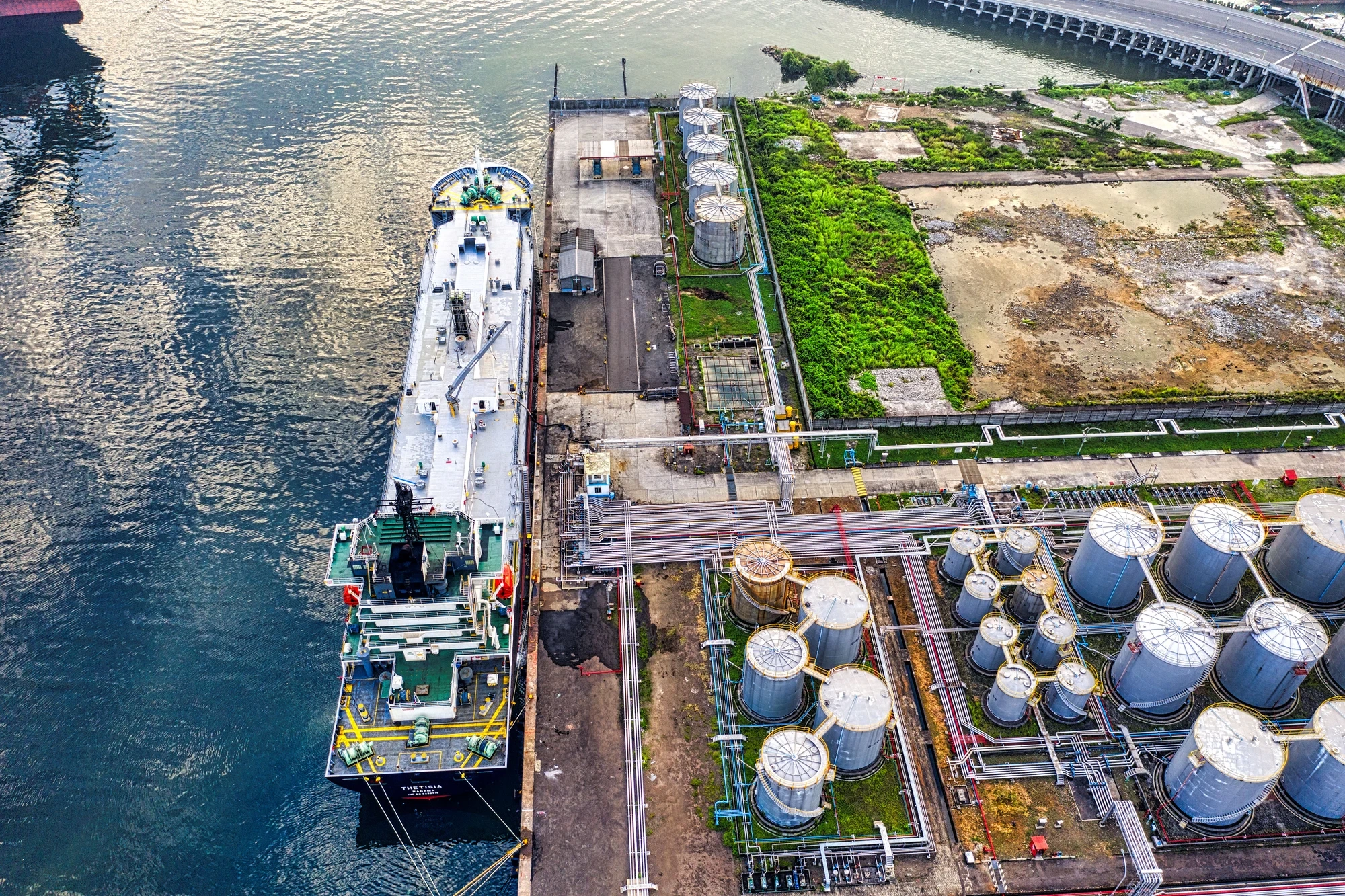
MARPOL Annex II applies to ships certified to carry noxious liquid substances (NLS) in bulk (regulation 2). Its present frame comes from the revised Annex adopted by resolution MEPC.118(52) on 15 October 2004, in force from 1 January 2007.
This article looks at what happens in Annex II after a tank is unloaded. How the category of a substance decides the prewash, who grants an exemption, how much water has to be used, and how all of that ends up in the Cargo Record Book. It also covers the added duty from MEPC.315(74), in force from 1 January 2021.
Four categories are the starting point
Regulation 6.1 divides substances by the hazard if they reach the sea through tank cleaning or deballasting. The category of a given substance is read from the pollution category column of chapters 17 and 18 of the IBC Code (regulation 1.10).
| Category | Assessment if discharged | Position of the Annex |
|---|---|---|
| X | Major hazard to marine resources or human health | Prohibition of discharge is justified |
| Y | Hazard, or harm to amenities or other legitimate uses of the sea | Limits on quality and quantity of discharge |
| Z | Minor hazard | Less stringent restrictions |
| Other Substances (OS) | Considered at present to cause no harm | Bilge, ballast and residues containing only OS fall outside the Annex’s requirements |
An uncategorized substance cannot be carried until the Governments involved agree a provisional assessment (regulation 6.3). Without one, the consequential discharge of washings containing it is prohibited as well (regulation 13.1.3).
A Category X tank has to be washed before the ship leaves the port
The key to regulation 13.6.1.1 is the timing.
shall be prewashed before the ship leaves the port of unloading
The resulting residues go to a reception facility. They keep going until analysis of samples taken by the surveyor shows the concentration in the effluent is at or below 0.1% by weight. Reaching that figure does not end it. The remaining washings keep going to the reception facility until the tank is empty. Any water put into the tank afterwards may be discharged to sea under the standards in regulation 13.2 (regulation 13.6.1.2).
If the Government of the receiving Party accepts that measuring the concentration would unduly delay the ship, it may accept an alternative procedure (regulation 13.6.3). The tank is then prewashed under an Administration-approved Appendix 6 procedure. The surveyor certifies three things in the Cargo Record Book. That the tank, pump and piping have been emptied, that the prewash followed Appendix 6, and that the washings went to a reception facility and the tank is empty (regulation 16.5).
On either route, Category X entries carry the endorsement of the surveyor referred to in regulation 16.1 (regulations 13.6.1.1 and 16.4).
Categories Y and Z divide into four situations
Before any prewash or discharge, the tank has to be emptied to the maximum extent following the Manual (the Procedures and Arrangements Manual, approved under regulation 14) (regulation 13.1.2).
| Situation | Prewash | Washings go to | Source |
|---|---|---|---|
| Category Y, High-Viscosity or Solidifying Substance | Mandatory (Appendix 6) | Reception facility until the tank is empty | 13.7.1.3 |
| Category Y or Z not unloaded in accordance with the Manual | Mandatory before leaving, unless alternative measures satisfy the surveyor | Reception facility at the port of unloading, or at another port confirmed in writing | 13.7.1.2 |
| Category Y persistent floater, in the regulation 13.9 areas | Mandatory (Appendix 6) | Reception facility at the port of unloading until the tank is empty | 13.7.1.4 |
| Other Category Y and Z | Not mandatory | Sea, under the regulation 13.2 standards | 13.7.1.1 |
Regulation 13.2 has three standards. The ship is en route at a speed of at least 7 knots if self-propelled, or at least 4 knots if not. The discharge is below the waterline through the underwater outlet, within its design maximum rate. The ship is at least 12 nautical miles from the nearest land in water at least 25 metres deep.
The third row was added by MEPC.315(74). It covers Category Y persistent floaters with a viscosity of 50 mPa·s or more at 20°C, or a melting point of 0°C or more. They are identified by 16.2.7 in column o of chapter 17 of the IBC Code. The areas are North West European waters, the Baltic Sea area, Western European waters and the Norwegian Sea (regulation 13.9). Because the rule applies in those areas, the route and the port of unloading have to be read together.
High viscosity and solidifying are judged at the unloading temperature
The two terms in the first row are not fixed by the name of the substance alone. The temperature at unloading goes into the judgment.
A High-Viscosity Substance is a Category X or Y substance with a viscosity of 50 mPa·s or more at the unloading temperature (regulation 1.17). The test for a Solidifying Substance splits on melting point (regulation 1.15). With a melting point below 15°C, it is solidifying when the unloading temperature is less than 5°C above the melting point. With a melting point of 15°C or more, the margin is less than 10°C.
Here is a hypothetical calculation. A Category Y substance with a melting point of 20°C unloaded at 28°C is 8°C above its melting point, so it is a Solidifying Substance. Unloaded at 32°C it is 12°C above, so it is non-solidifying. The same cargo can change its prewash duty with the unloading temperature.
A prewash exemption comes from the receiving Government at the master’s request
The party granting the exemption is the Government of the receiving Party, not the flag State (regulation 13.4). One of three conditions has to be met.
- The tank is to be reloaded with the same or a compatible substance and will not be washed or ballasted before loading.
- The tank is neither washed nor ballasted at sea. The prewash is done at another port, with written confirmation that a reception facility there is available and adequate.
- The residues will be removed by a ventilation procedure approved by the Administration (Appendix 7).
This exemption may only be granted to a ship on voyages to ports or terminals under the jurisdiction of other Parties (regulation 16.7). Once granted, the Cargo Record Book entry has to be endorsed by the surveyor.
The minimum wash water comes from a formula
Ships built on or after 1 July 1994 set the minimum with the formula in Appendix 6, part B. Earlier ships follow part A, which sets cleaning machine cycles, and part B is recommendatory for them.
Q = k(15r^0.8 + 5r^0.7 × V/1000)
Q is the minimum quantity (m3), r is the residual quantity per tank (m3) and V is the tank volume (m3). The value of r is the one shown in the stripping test, but it has a floor. That is 0.100 m3 for a tank of 500 m3 and above and 0.040 m3 for 100 m3 and below, with linear interpolation between. For Category X, r comes from the stripping tests in the Manual or is taken as 0.9 m3.
The factor k follows the substance. It is 1.2 for Category X non-Solidifying Low-Viscosity, 2.4 for Category X Solidifying or High-Viscosity, 0.5 for Category Y non-Solidifying Low-Viscosity, and 1.0 for Category Y Solidifying or High-Viscosity. The table in Appendix 6 gives values at k of 1. For a 500 m3 tank, that is 2.9 m3 with r at 0.10 and 16.1 m3 with r at 0.90.
The rows below use that table for a hypothetical 500 m3 tank.
| Substance | k | r (m3) | Table value × k | Minimum quantity |
|---|---|---|---|---|
| Category X non-Solidifying Low-Viscosity, default r | 1.2 | 0.90 | 16.1 × 1.2 | About 19.3 m3 |
| Category X non-Solidifying Low-Viscosity, tested r | 1.2 | 0.10 | 2.9 × 1.2 | About 3.5 m3 |
| Category Y Solidifying or High-Viscosity | 1.0 | 0.10 | 2.9 × 1.0 | About 2.9 m3 |
The gap between the two Category X rows comes from r. A tank whose stripping performance is proven by test uses less wash water and sends less to the reception facility. Lower volumes can also be approved through verification testing to the satisfaction of the Administration. Approved volumes are recorded in the Manual (the introduction to Appendix 6 part B and paragraph 21).
There are conditions on the method too. Substances with a viscosity of 50 mPa·s or more at 20°C and Solidifying Substances are washed with hot water of at least 60°C. The exception is where the substance’s properties make that less effective. Recycled washing medium may only be used for tanks that held the same or a similar substance (paragraph 14 of Appendix 6).
The Cargo Record Book runs on operation codes and item numbers
The form in Appendix 2 groups operations into 11 codes. Entries are made tank by tank.
| Code | Operation | Item numbers | Items to note |
|---|---|---|---|
| A | Loading of cargo | 1, 2 | Substance names and categories |
| B | Internal transfer of cargo | 3 to 6 | Quantity remaining after transfer |
| C | Unloading of cargo | 7 to 11 | 9.1 confirmation of emptying under the Manual, 10 whether a prewash is required |
| D | Mandatory prewash | 12 to 14 | Number of machines, duration, hot or cold, where slops went |
| E | Tank cleaning other than mandatory prewash | 15, 16 | Cleaning agents and quantities, ventilation procedure |
| F | Discharge into the sea of tank washings | 17 to 19 | Rate, times, ship’s speed |
| G | Ballasting of cargo tanks | 20, 21 | Time at start |
| H | Discharge of ballast from cargo tanks | 22 to 25 | Times, ship’s speed |
| I | Accidental or other exceptional discharge | 26 to 28 | Time, approximate quantity, circumstances |
| J | Control by authorized surveyors | 29 to 37 | 34 and 35 exemption and reasons, 36 and 37 surveyor’s signature and organization |
| K | Additional operational procedures and remarks | No number | Free text |
The rest of regulation 15 reads as follows.
- Each operation is recorded promptly after completion (15.2).
- The date, code and item number go in the columns, and the particulars are written in chronological order (introduction to Appendix 2).
- The officer in charge signs each entry and the master signs each page (15.4).
- An accidental discharge or a discharge under regulation 3 is entered with its circumstances and reason (15.3).
- On ships holding an NLS certificate, entries are at least in English, French or Spanish. If an official language of the flag State is also used, it prevails in a dispute (15.4).
- The book is retained for three years after the last entry and stays on board, except on unmanned ships under tow (15.5).
- Receipts or certificates from reception facilities are kept with the Cargo Record Book (footnote to Appendix 2).
While the ship is in port, a Party’s competent authority may copy entries and require the master to certify the copy as true. A certified copy is admissible as evidence in judicial proceedings (15.6).
One hypothetical Category X tank runs like this
Below is a hypothetical order of entries for a single tank that discharged a Category X substance.
| Step | Code and item | What is written | Signed by |
|---|---|---|---|
| 1 | C 7, 8 | Place of unloading, tank unloaded | Officer in charge |
| 2 | C 9.1 | Confirmation that the tank was emptied and stripped per the Manual | Officer in charge |
| 3 | C 10 | The Manual requires a prewash with disposal to reception facilities | Officer in charge |
| 4 | D 12, 13 | Tank, substance, category, machines, duration, hot or cold | Officer in charge |
| 5 | D 14.1 | Reception facility in the port of unloading that took the slops | Officer in charge |
| 6 | J 29 to 33 | Port, substance, emptying, prewash, washings discharged ashore | Surveyor |
| 7 | J 36, 37 | Surveyor’s name, signature and organization | Surveyor |
When the page is complete, the master signs. The master has to ensure that regulations 13 and 16 have been complied with and that the book is completed under regulation 15 (regulation 16.3). A Category X prewash happens in the port of unloading, so the surveyor’s endorsement is also obtained in that port.
What to confirm
This article rests on the original text of MEPC.118(52) and the amendments of MEPC.315(74). Annex II has been amended beyond these. MEPC.314(74) changed the electronic record book definition and the signature unit, and MEPC.270(69) and MEPC.344(78) changed the GESAMP legend in Appendix 1. Before applying any of this, check the text and form in the current consolidated edition.
Some things are not covered here. The GESAMP categorization rules in Appendix 1, the residue limits in regulation 12, the cleaning additive conditions in regulation 13.5, and the ventilation procedures in Appendix 7. The category of individual substances and the 16.2.7 marking are checked in the current IBC Code and the MEPC.2 circular. For the prewash itself, the ship’s approved Manual comes first.
You can consult the cited source documents
These links lead to the official publishers of the documents discussed here. Match the edition and provisions cited in the article, and check subsequent amendments and flag-state implementation before applying them.
Continue with the related operational guidance
Bellbook is an operations platform for shipping companies: planned maintenance and certificates, audit prep, crew HR and payroll, and voyage reporting in one place.
Start for freeRelated reading
- Polar Code Part II discharge requirements for oil, noxious liquid substances, sewage and garbage and when they apply (MEPC.264(68))Environment and regulation
- Packing, marking, documents, stowage and quantity limits for packaged harmful substances and the changed regulation numbers (MARPOL Annex III, MEPC.193(61))Environment and regulation
- The six conditions for oil discharge from a tanker cargo area and the ODME, slop tanks and Oil Record Book Part II (MARPOL Annex I Regulation 34)Environment and regulation