Packing, marking, documents, stowage and quantity limits for packaged harmful substances and the changed regulation numbers (MARPOL Annex III, MEPC.193(61))
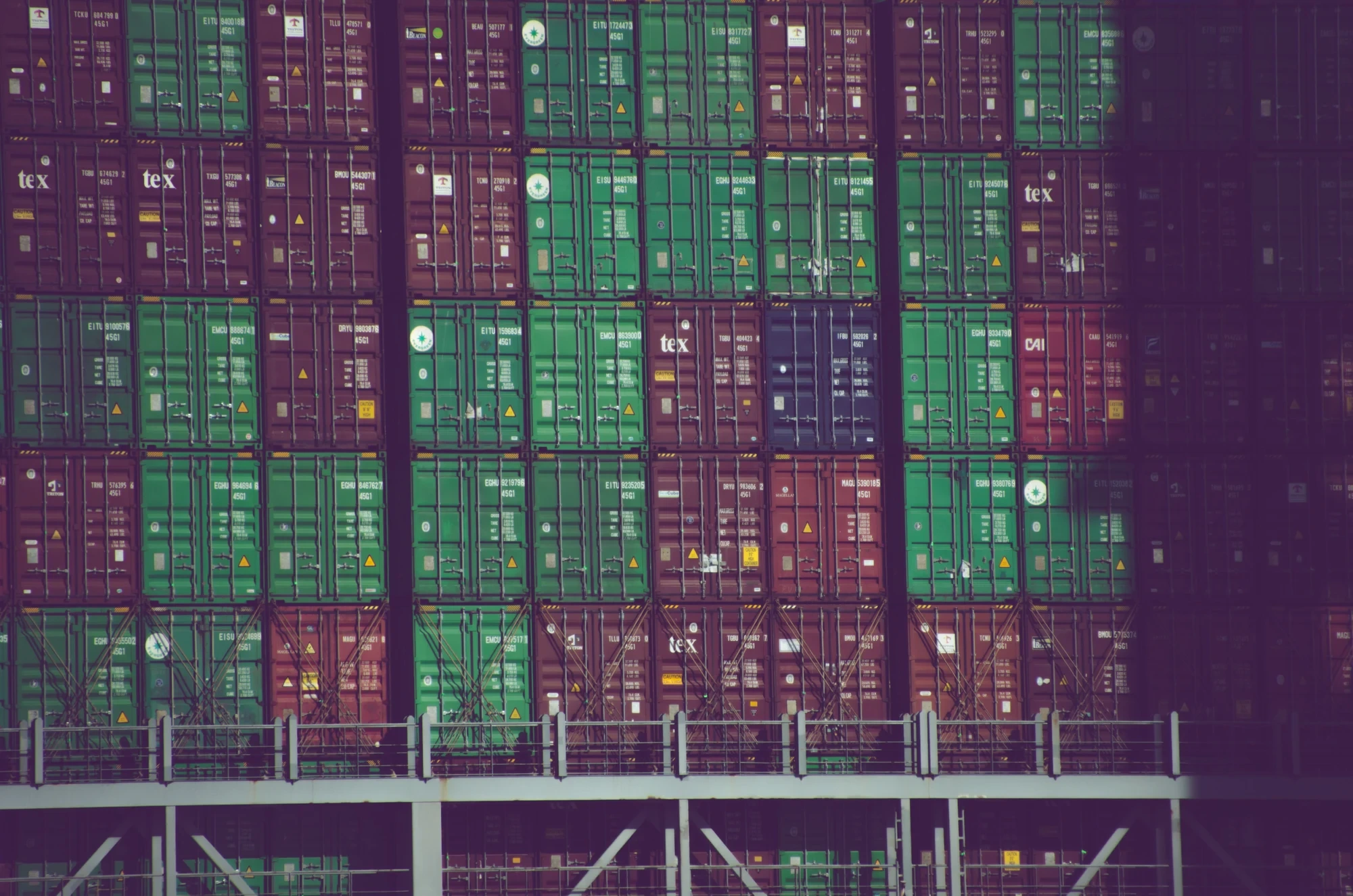
MARPOL Annex III covers harmful substances carried by sea in packaged form. The base document for this article is resolution MEPC.193(61), adopted on 2010-10-01. The resolution says it replaces the whole of Annex III as adopted by MEPC.156(55), and it entered into force on 2014-01-01.
Two traps wait when you look up a provision. The regulation numbers changed afterwards, and the detailed requirements sit in the IMDG Code, not in the Annex. This article fixes the numbers first and then reads the text.
The regulation numbers in MEPC.193(61) are not today’s numbers
MEPC.246(66), in force from 2016-01-01, made the III Code mandatory and put a new definitions regulation at the front of Annex III. One sentence then moved everything behind it.
The subsequent regulations are renumbered accordingly.
So Regulations 1 to 8 of MEPC.193(61) became Regulations 2 to 9. This article uses the current numbers in the table below.
| Content | MEPC.193(61) | After MEPC.246(66) |
|---|---|---|
| Definitions | None | Regulation 1 |
| Application | Regulation 1 | Regulation 2 |
| Packing | Regulation 2 | Regulation 3 |
| Marking and labelling | Regulation 3 | Regulation 4 |
| Documentation | Regulation 4 | Regulation 5 |
| Stowage | Regulation 5 | Regulation 6 |
| Quantity limitations | Regulation 6 | Regulation 7 |
| Exceptions | Regulation 7 | Regulation 8 |
| Port State control on operations | Regulation 8 | Regulation 9 |
| Verification of compliance (chapter 2) | None | Regulations 10, 11 |
The port State control procedures in resolution A.1206(34) use these numbers too. They cite the dangerous goods manifest or stowage plan as Annex III Regulation 5 and the basis for control as Regulation 9. Searching with the old numbers lands you one place off.
The IMDG Code defines harmful substances and packaged form
Harmful substances are those identified as marine pollutants in the IMDG Code or meeting the criteria in the Annex’s appendix (Regulation 1.1). Packaged form is the forms of containment the IMDG Code specifies for harmful substances (Regulation 1.2). Both definitions used to sit inside the application regulation, and MEPC.246(66) moved them to Regulation 1.
Regulation 2 sets the scope.
- It applies to all ships carrying harmful substances in packaged form (Regulation 2.1). There is no ship type or tonnage threshold.
- Carriage is prohibited except in accordance with the Annex (Regulation 2.2).
- Each Party’s Government issues, or causes to be issued, detailed requirements on packing, marking, labelling, documentation, stowage, quantity limitations and exceptions (Regulation 2.3).
- Empty packagings used for harmful substances are treated as harmful substances unless precautions ensure no residue remains (Regulation 2.4).
- Ship’s stores and equipment are outside the Annex (Regulation 2.5).
MEPC.193(61) dropped the detailed marking and document wording
Put MEPC.156(55) and MEPC.193(61) side by side and the point of the replacement shows. What the old text spelled out, the new text hands to the IMDG Code.
| Item | Text in MEPC.156(55) | Text in MEPC.193(61) |
|---|---|---|
| Marking content | Correct technical name, not trade names alone, marine pollutant marking | Durably marked or labelled as a harmful substance |
| Durability | Identifiable after three months’ immersion in the sea | Per the relevant IMDG Code provisions |
| Small quantities | Small packages may be exempted from marking | Gone from the Annex |
| Documents | Technical name with MARINE POLLUTANT, shipper’s signed certificate |
Transport information per the IMDG Code |
| Copies ashore | Owner’s side retains copies ashore until unloading | Gone from the Annex |
| Revision at stopovers | Revised documents at each stopover with cargo operations | Gone from the Annex |
Do not read the gaps in the right column as requirements that vanished. The Annex no longer states them itself, and the answer has to come from the IMDG Code. This article did not read the IMDG Code text, so it does not say how each item moved there.
Five short provisions, with the detail passed to the IMDG Code
| Regulation | Topic | Requirement |
|---|---|---|
| 3 | Packing | Adequate to minimize the hazard to the marine environment given the contents |
| 4 | Marking | Durably marked or labelled, with the method of affixing per the IMDG Code |
| 5 | Documents | Transport information per the IMDG Code to the person the port State designates, plus an on-board list or plan |
| 6 | Stowage | Stowed and secured to minimize hazards without impairing ship and personnel safety |
| 7 | Quantity | Certain substances may need to be prohibited or limited per ship for scientific and technical reasons |
For Regulation 5.2, one of three documents is enough. It may be a special list, a manifest or a stowage plan. Whichever it is must set out the harmful substances on board and their location, per the IMDG Code. A copy of one of them is made available before departure to the person or organization the port State designates.
Regulation 7 has no quantity figure. It only lists what to consider when limiting. Those are the size, construction and equipment of the ship, the packaging and the inherent nature of the substance. Specific bans or limits are found in the Party requirements under Regulation 2.3 and the IMDG Code.
Jettisoning opens only for safety and saving life
Jettisoning packaged harmful substances is prohibited. The exception is where it is necessary to secure the safety of the ship or save life at sea (Regulation 8.1). Washing leakages overboard is regulated by measures based on the substance’s properties. Those measures must not impair the safety of the ship and persons on board (Regulation 8.2).
The substance criteria are aquatic toxicity figures in the appendix
The appendix sorts harmful substances by aquatic toxicity. A substance that meets any one line below is a harmful substance. MEPC.257(67), in force from 2016-03-01, changed the chapeau to exclude radioactive materials (class 7) and to state that the criteria are based on the GHS.
| Group | Category | Measure | Criterion |
|---|---|---|---|
| Acute | Acute 1 | LC50, EC50, ErC50 | 1 mg/L or less |
| Long-term, not rapidly degradable | Chronic 1 | Chronic NOEC or ECx | 0.1 mg/L or less |
| Long-term, not rapidly degradable | Chronic 2 | Chronic NOEC or ECx | 1 mg/L or less |
| Long-term, rapidly degradable | Chronic 1 | Chronic NOEC or ECx | 0.01 mg/L or less |
| Long-term, rapidly degradable | Chronic 2 | Chronic NOEC or ECx | 0.1 mg/L or less |
| No adequate chronic data | Chronic 1 | Acute toxicity values | 1 mg/L or less, plus the condition below |
| No adequate chronic data | Chronic 2 | Acute toxicity values | Over 1 mg/L up to 10 mg/L, plus the condition below |
The condition in the last two lines is that the substance is not rapidly degradable or has a measured BCF of 500 or more. Without a BCF, a log Kow of 4 or more is used. The test species are fish, crustacea, and algae or other aquatic plants, and any one of them can decide.
Here is a hypothetical case. A shipper’s data sheet gives a 96-hour fish LC50 of 0.8 mg/L for a substance. That value meets Acute 1. Regulation 1.1 joins the IMDG Code listing and the appendix criteria with or, so the appendix criteria alone make it a harmful substance. Further guidance on the classification process is in the IMDG Code.
Port State control looks at documents and crew familiarity together
Under Regulation 9.1, a ship in a port or offshore terminal of another Party is subject to inspection on the operational requirements of this Annex. Where there are clear grounds to believe the master or crew are not familiar with pollution prevention procedures, the Party takes steps including detailed inspection and, if required, keeps the ship from sailing until the situation is put right (Regulation 9.2).
The procedures in resolution A.1206(34) have three relevant points.
- Items in the list of examples of detainable deficiencies. They include no dangerous cargo manifest or detailed stowage plan before departure, stowage and segregation not meeting chapters 7.1, 7.2, 7.4, 7.5 and 7.6 of the IMDG Code, and carrying damaged or leaking packages. That list is illustrative, not exhaustive.
- Cargoes determined to be marine pollutants should be labelled and stowed in accordance with Annex III (A.1206(34) inspection guidance 1.7.3).
- The SOLAS chapter VII manifest or stowage plan may be combined with the one under Annex III (A.1206(34) inspection guidance 1.7.4). There is no need for two sets of dangerous goods papers.
Worth confirming
This article did not cover the IMDG Code text. Check mark sizes, document wording, the segregation table and the current small quantity provisions in the applicable edition of that Code. The document list in A.1206(34) shows Amendment 42-24. The amendments read for this article are MEPC.193(61), MEPC.246(66) and MEPC.257(67), and later ones should be checked in a consolidated edition.
It also did not cover the Party-specific detailed requirements mentioned in Regulation 2.3. Chapter 3 of part II-A of the Polar Code is blank on this topic, so it adds no requirement for polar waters.
You can consult the cited source documents
These links lead to the official publishers of the documents discussed here. Match the edition and provisions cited in the article, and check subsequent amendments and flag-state implementation before applying them.
Continue with the related operational guidance
Bellbook is an operations platform for shipping companies: planned maintenance and certificates, audit prep, crew HR and payroll, and voyage reporting in one place.
Start for freeRelated reading
- Polar Code Part II discharge requirements for oil, noxious liquid substances, sewage and garbage and when they apply (MEPC.264(68))Environment and regulation
- The six conditions for oil discharge from a tanker cargo area and the ODME, slop tanks and Oil Record Book Part II (MARPOL Annex I Regulation 34)Environment and regulation
- Cargo Record Book entries and when a prewash becomes mandatory for Category X, Y and Z substances (MARPOL Annex II Regulations 13 and 15)Environment and regulation